There are several things you need to add to complement the work you've done. Although they sometimes seem minor, they are vitally important to shaping a performance of the piece. These include
Although dynamics are commonly thought of as forte and piano, they really are a result of many factors: register, texture, instrumentation, and density. They truly have more to do with the overall dynamic plan of a piece than the simply addition of forte and piano.
However, those dynamics are still required to be present for the performers' sake. One piece of advice: stay away from the "mezzo" dynamics. They tend to be over-used and are just too "lukewarm" to be effective. Commit yourself to either a loud dynamic or a soft dynamic, and convey that with conviction to the performers. They will understand you much better.
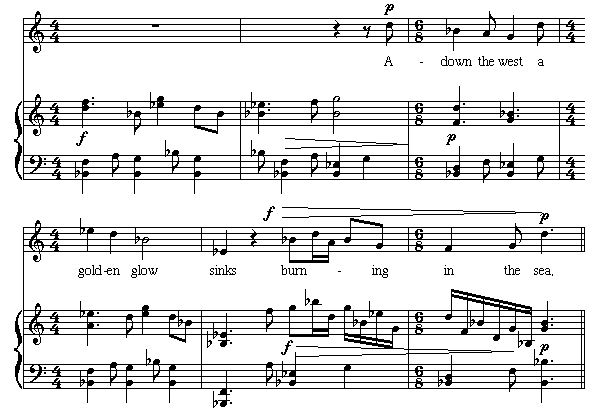
Generally, singers do not need many articulation marks, since the words they sing take on that duty. But instrumentalists need them to be extremely clear. The difference between legato and staccato is huge, and performers need to know what your intentions are. There are numerous types of accents, stresses, releases, and style marks...use them freely to give your performers direction on how to perform your music.
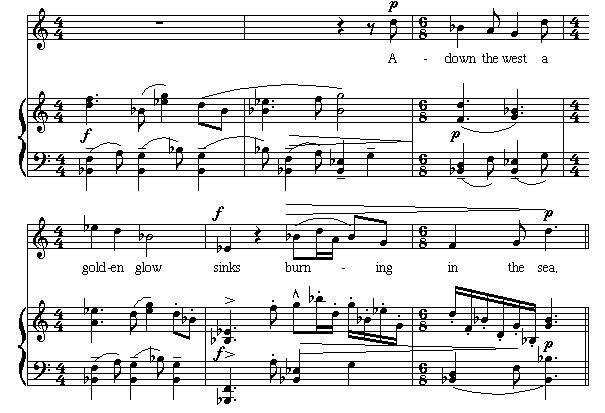
There is only one accurate way to convey tempo: use a metronome marking. USE IT!!! You will be disappointed if you don't give the performers an accurate speed to realize your music. Words such as "fast" and "slow" are too vague, and the Italian directions are even worse. Allegro, adagio, andante, and so on, have meanings that go beyond mere speed...they have connotations of mood and attitude connected to them as well. Even though manufacturers frequently attach these words to their machines, don't believe them. Use a metronome marking instead.
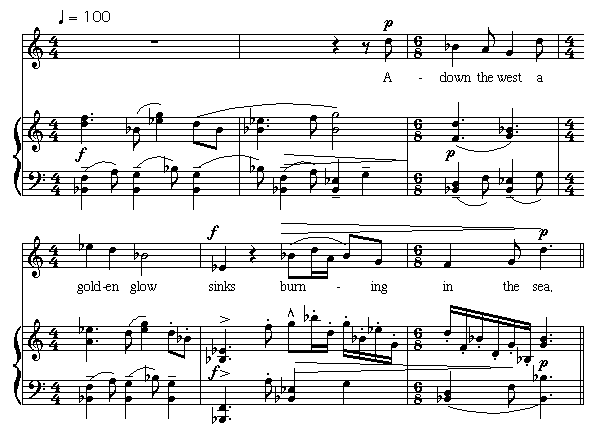
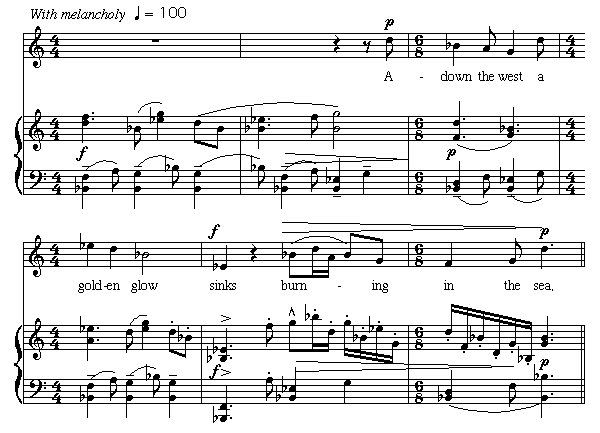
Few things can replace one or two well-chosen words to help a performer bring a piece to life. Any description can be valuable and your native language is best. Examples of these words might be "delicately", "far-way", "simply", "gently", "savagely", and "majestically". Words of little use are "expressively" (what does that actually mean anyway?) or "sweetly". Music for percussion players requires even more words, such as telling them what kind of mallets for them to use or special techniques with their instruments.
Copyright � 2008-2009 by Phillip Magnuson.
Content on this website is licensed under a Creative Commons License.