In addition to an accompaniment, or perhaps INSTEAD of an accompaniment, you could add other voices to your original melody, and make it into a choral work. There are various textures which you might consider for this (see Chapter 3 in this text).
A monophonic texture is when one voice (or more) sing exactly the same line. This is a powerful statement, and can be used effectively to emphasize a particularly important part of the lyrics.

A heterophonic texture is when multiple voices sing fundamentally the same line, but one has more ornamentation and elaboration. This texture generally works better when a voice is combined with an instrument.
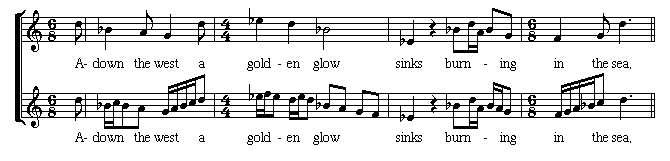
A homophonic texture is when multiple voices sing independent lines, but within the same (or similar) rhythms. A common example of this is the church hymn.

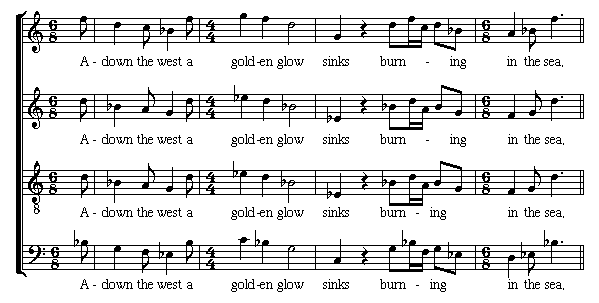
Another type of homophonic texture could be achieved with PLANING (all voices moving in the same direction by the same interval). This texture shares characteristics with monophony since the voices are not really independent. The example below moves in parallel triads.
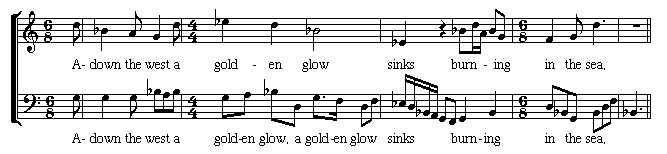
A polyphonic texture is when multiple voices have independent melodies (both pitch and rhythm) sounding simultaneously.
This could be achieved as simply as writing a countermelody. Consider the following principles for doing this:
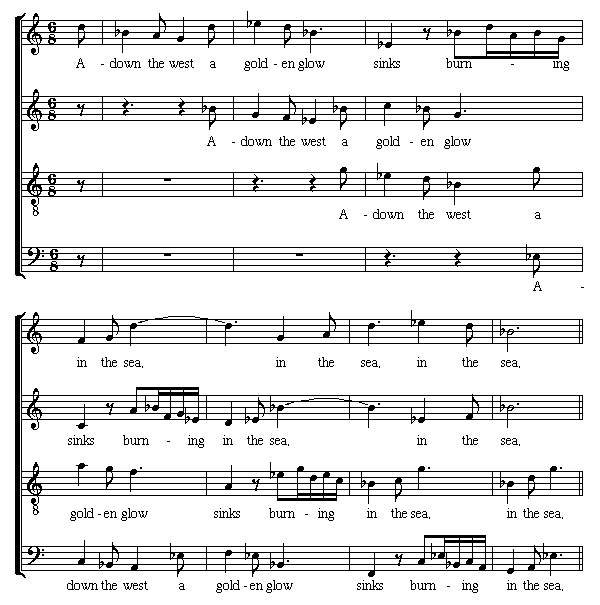
Another way polyphony could be used is with imitation (as with a round, subsequent voices use the same melodic material as prior ones). In the example below, see how each voice begins with the same material, but not at the same time.
With all the possibilities, what type of texture should you use? To make an interesting composition, it is a good idea to use multiple textures. Consider the text painting possibilities, the mood of the text, and the meaning of the text; these will guide you to the appropriate texture(s).
Copyright � 2008-2009 by Phillip Magnuson.
Content on this website is licensed under a Creative Commons License.