Seventh Chords & Extended Harmonies
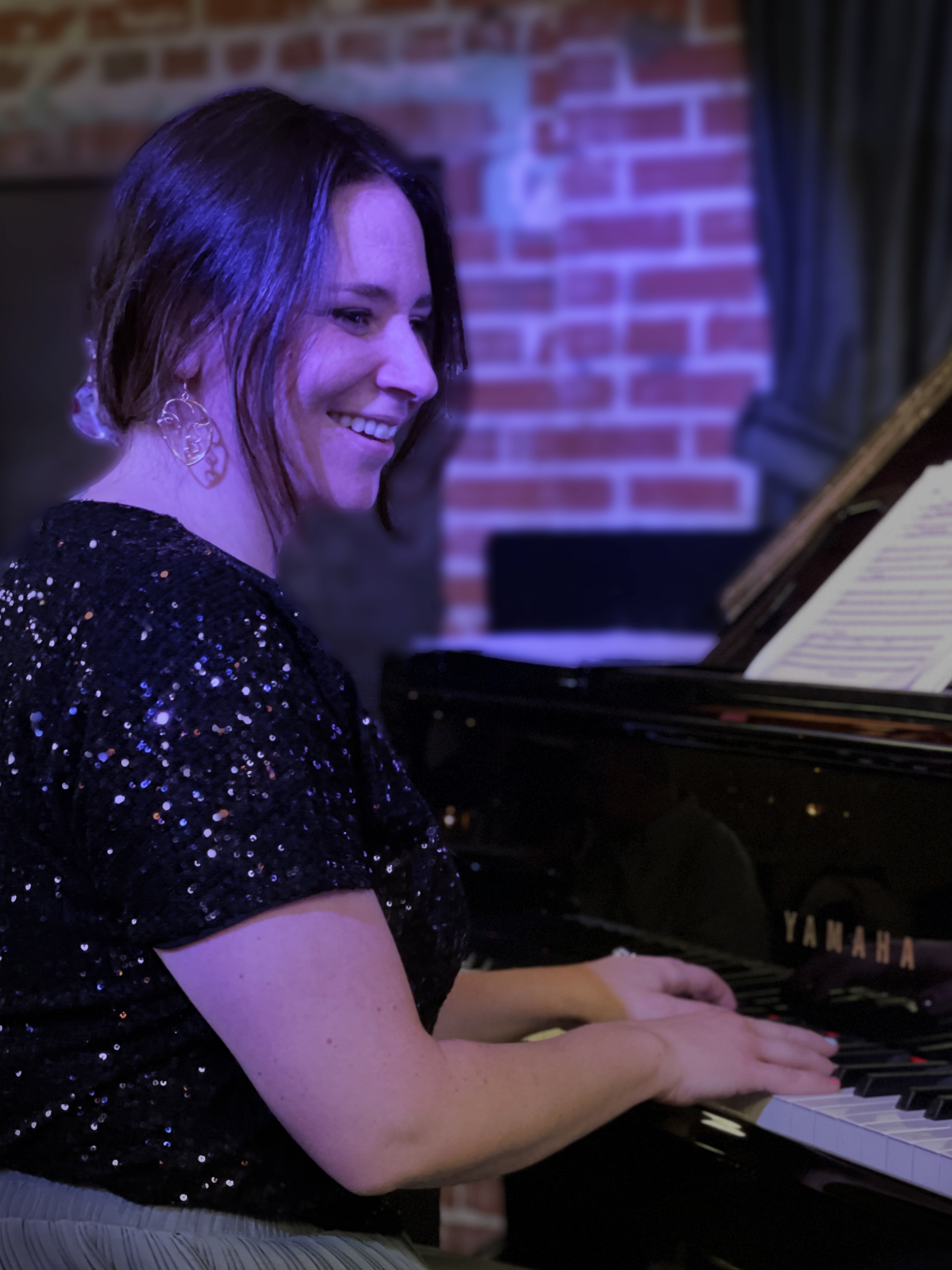

A chord with four notes is called a tetrad. Because tertial tetrads — four-note chords built using major and minor thirds — contain a note which is a seventh above the root, these chords are more commonly called seventh chords.
Types of Seventh Chords
By using major and minor thirds, we can create eight possible types of seventh chords. Seventh chords are often labeled using two terms: the type of triad to start from and the type of seventh to add above the root.
Major-major seventh chords are generally referred to as major seventh chords; likewise, minor-minor seventh chords are simply called minor seventh chords. Diminished-diminished seventh chords are commonly called fully diminished seventh chords, while diminished-minor chords are generally called half-diminished seventh chords.
Of the eight possible seventh chords, the minor-major seventh chord and the augmented-major seventh chord are rarely used, and the augmented-augmented seventh chord is enharmonically equivalent to an augmented triad with a doubled root.
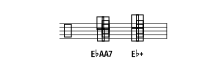
In addition to root position, first inversion and second inversion, seventh chords can appear in third inversion, in which the seventh of the chord is the lowest sounding voice.
Extended Harmonies
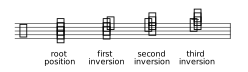
Within tertial harmony, it is possible to continue adding thirds to create pentads, hexads, and heptads, which are more commonly known as ninth chords, eleventh chords and thirteenth chords. Further additions are not generally considered because they result in duplicate notes.
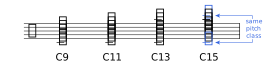
While these chords can be named using the same system as seventh chords, the names can are unwieldy and rarely used. Because of this, theorists usually use a naming system drawn from jazz genres, which is further described in Harmonic Analysis.
Depending on the type of chord, extended harmonies can be placed in positions up to fourth, fifth, and sixth inversion, with the ninth, eleventh or thirteenth of the chord placed in the bass, respectively.
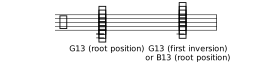
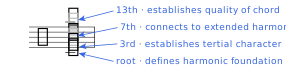
Not all notes in these large chords are always included. When selecting which voices to leave out, composers and arrangers almost always include at least the following:
- the root, which defines the foundation of the chord,
- the third, which gives the chord a tertial quality and characterizes is as major or minor,
- the highest chord member, which defines the chord as a ninth, eleventh or thirteenth, and
- the seventh, which acts as an aural "bridge" connecting the extended harmonies.
Other Chords
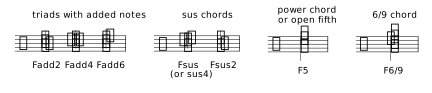
Other types of chords that are common in some 12-TET styles include:
- chords with added seconds, fourths, or sixths, which are often called add 2, add 4 or add 6 chords, respectively,
- triads where the third is replaced by a fourth above the root, called a sus chord,
- triads where the third is replaced by a second above the root, called a sus 2 chord,
- dyads consisting only of the root and a perfect fifth above the root, called open fifth chords or power chords, and
- ninth chords which contain a sixth above the root in place of a seventh above the root, called 6/9 chords.
Seventh Chords & Extended Harmonies: Summary
- A chord with four notes is called a tetrad, but tertial triads are more commonly called seventh chords.
- There are eight different possible seventh chords in the 12-TET system.
- Seventh chords are usually labelled in two parts: the name of the triad used and the type of seventh added above the root.
- Major-major seventh chords and minor-minor seventh chords are commonly called major seventh chords and minor seventh chords, respectively.
- Diminished-minor seventh chords and diminished-diminished seventh chords are commonly called half-diminished seventh chords and fully diminished seventh chords, respectively.
- Seventh chords can be placed in root position, first inversion, second inversion, or third inversion.
- Chords with added ninths, elevenths, or thirteenths above the root are called extended harmonies.
- The thirteenth is the furthest possible harmonic extension, since a fifteenth simply doubles the root.
- Extended harmonies can be placed in inversions up to sixth inversion, but are less aurally distinctive.
- Composers and arrangers often omit chord tones from extended harmonies, but generally retain at least the root, third, seventh, and whatever note is the furthest extension in the chord.
- Examples of chords in 12-TET styles that are not limited to stacked major and minor thirds include chords with added notes, sus chords, open fifth or power chords, and 6/9 chords.