Eclecticism, Quotation & Adaptation


Composers can take advantage of the wide history and diversity of musical culture — and the listener's awareness and understanding of that history and diversity — to create new works which draw from multiple sources.
Eclecticism
When a composer or songwriter creates an original composition which draws upon different, recognizable musical languages, the result is called polystylism or eclecticism.
Historical & Genre-based Eclecticism
One form of eclecticism combines musical techniques of different eras into a single work. For example, Russian composer Alfred Schnittke's first Concerto Grosso, written in 1977, combined Baroque musical elements, such as the concerto grosso form and the use of a harpsichord, with modern elements like prepared piano and pandiatonicism.
Eclecticism can also feature the juxtaposition of different genres. English composer Peter Maxwell Davies' 1969 work St. Thomas Wake was written for a full orchestra and a second, smaller instrumental group sitting beside the orchestra. The piece recalls the composer's childhood experiences during 1940 German bombing of London, with the large orchestra portraying the chaos of the Blitz while the smaller orchestra plays foxtrots evokative of his parents' records, which he would play during the siege.
Cultural Eclecticism
Perhaps the most common form of eclecticism is music which draws from multiple cultures. This combination can be seen in two works by Japanese composer Tōru Takemitsu: 1967's November Steps and 1973's Autumn. These works were written for the traditional Japanese instruments biwa and shakuhachi accompanied by a traditional symphony orchestra. Because the biwa and shakuhachi did not have their own traditional notation, it was necessary for the composer to create a notational system for the works.
Despite constructive intentions, cultural eclecticism can sometimes lead to cultural appropriation, the adoption of a cultural element which robs the borrowed element of some of its identity. When exercised by a dominant culture like that of Europe or America, this can be an example of colonialism.
Code Switching & Crossover
Performing artists which are associated with a particular genre may draw upon a different genre in a particular work; for example, in his 1978 song Rosalinda's Eyes, American singer-songwriter Billy Joel makes use of marimba, steelpan, and sopranino recorder, and sings with an accent to portray the point of view of a Cuban immigrant. This type of temporary shift is called code switching, and even when multiple styles are not present in a single composition, the juxtaposition of the differing style with the awareness of the songwriter's usual genre gives the effect of eclecticism.
In some cases, performing artists will record songs intended to be successful in multiple genres. This process, called crossover, can involve incorporating characteristic elements from both genres or, in some cases, recording multiple versions of the same song with different instrumentation or vocal inflection.
Quotation
Often, a composer or songwriter will include a portion of another piece within their own composition. When this is done with the intent of taking credit for the work, it is plagiarism, and is considered inappropriate and dishonorable in the creative and academic world.
When, however, this sort of inclusion is done without the intent of claiming ownership, it is called quotation. In her 1980 work Offertorium, Russian composer Sofia Gubaidulina used the the primary theme of German composer Johann Sebastian Bach's 1747 work The Musical Offering but placed it in the context of an atonal piece in the style of Austrian composer Anton Webern.
Sampling
Quotation often occurs in popular music; for example, American singer/songwriter Biz Markie's 1989 song Just a Friend uses melodic, harmonic and lyrical elements from American singer/songwriter Freddie Scott's 1968 song (You) Got What I Need.
When a popular piece incorporates an actual recorded excerpt of another song, rather reperforming it, it is referred to as sampling. Sampling is widely used in many genres of popular music; hip hop music, for example, was founded upon turntablists mixing previously recorded works to create beats.
A sampled recording can be incorporated into a song in different ways. American singer-songwriter Eminem's 2000 song Stan features a longer sample English singer-songwriter Dido's 1999 song Thank You, and uses the sample's drum beat under Eminem's rap vocals. Other songs use only a short sample and loop it to create a backing rhythm for the work, as in Belgian-Australian singer-songwriter Gotye's 2011 song Somebody That I Used to Know, which uses a two-beat guitar sample from the beginning of Brazilian composer and guitarist Luiz Bonfá's 1967 recording Seville.
Legal Issues
In most cases, songwriters who wish to make use of a sample must ensure they have the permission of the original creator. This may include securing both publishing rights to the composition and mechanical rights to the recording itself.
When artists do not make these legal arrangements — generally involving contracts which define how subsequent royalties are paid — they may be sued by the rights holder for the profits involved. A well-known case of this involves American singer-songwriter Vanilla Ice, who in his 1990 song Ice Ice Baby used the bassline from the 1981 song Under Pressure by English artists Queen and David Bowie without permission.
Recent lawsuits for plagiarism have gone beyond sampling and quotation; in 2018, an American court ruled that the 2013 song Blurred Lines by American songwriters Robin Thicke and Pharrell Williams copied the "feel" and "sound" of American singer-songwriter Marvin Gaye's 1977 song Got to Give It Up, and awarded songwriting credits and more than $5 million in damages to Marvin Gaye's estate.
Adaptation
While some compositions are written for a single, specific performance or recording, others are written with the intent that they be performed widely by others. As part of this, a certain measure of performer interpretation is expected: for example, recordings of Polish composer Frédéric Chopin's 1839 Preludes, Op. 28 by Argentine-Swiss pianist Martha Argerich and by Croatian pianist Ivo Pogorelić are notable in their different approaches.
When a piece is performed or recomposed by another creator in a way that changes characteristics of the original, it is considered to be adaptation. Different types of adaptation can be categorized by intent and genre.
Arrangement
In the notated music tradition, the adaptation of a work — either another notated work or from another genre — is referred to as an arrangement.
Commonly arrangements are done as a means of performing a piece with a different performing ensemble. A famous example of this is French composer Maurice Ravel's 1922 orchestral arrangement of the 1874 piano suite Pictures at an Exhibition by Russian composer Modest Mussorgsky.
Composers will sometimes make arrangements of their own works; American composer Samuel Barber most well-known work, Adagio for Strings, is actually an arrangement of the second movement of the composer's own String Quartet, Op. 11.
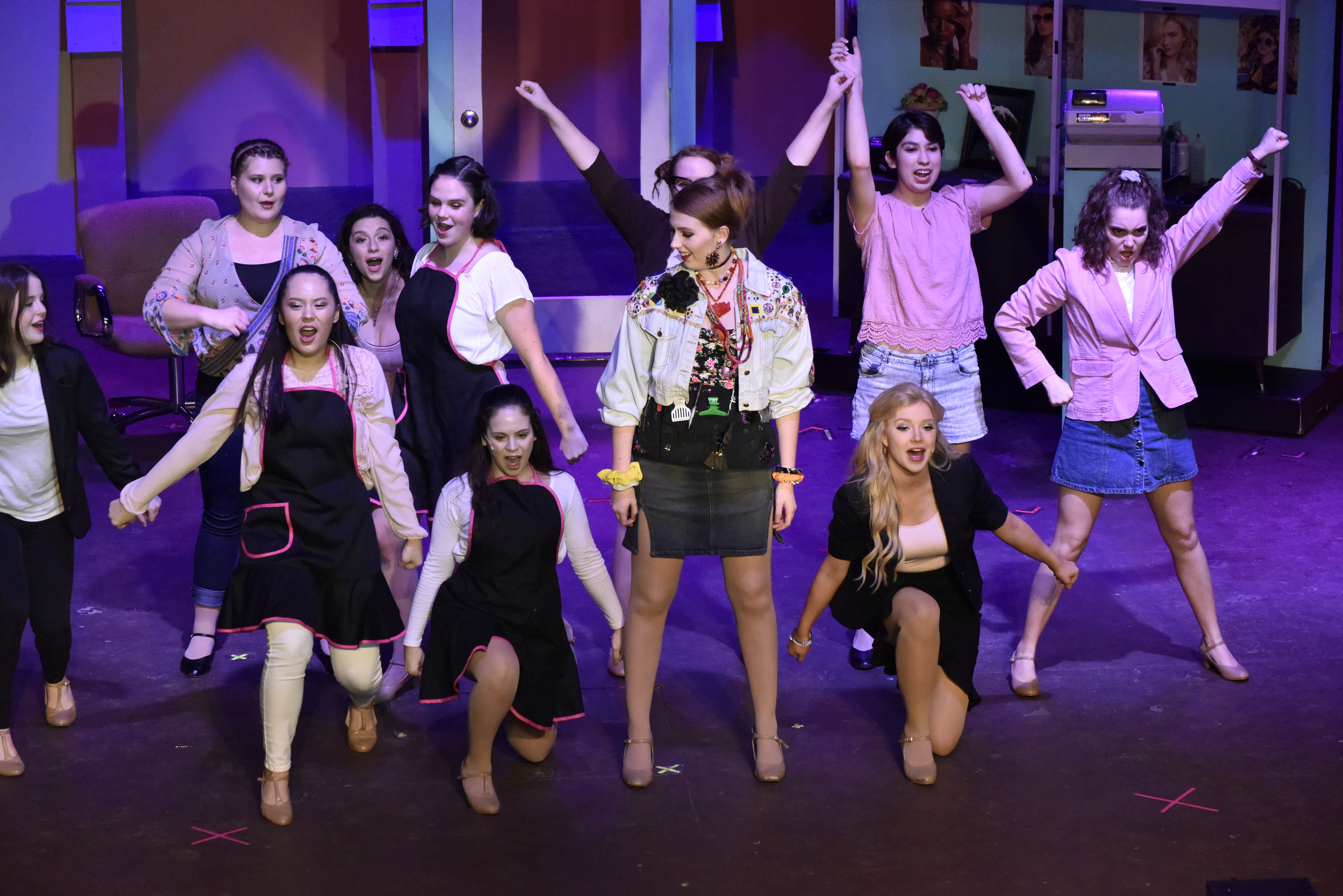
Arrangements are common in music for school music ensembles, where younger players are not yet able to play more difficult parts. Arrangers will sometimes combine arrangements of related works into a single piece called a medley. Musical theatre productions which have completed their original run and tour will sometimes publish simplified arrangements of their shows suitable for secondary school theater groups.
Covers
The adaptation of another work by a recording artist is called a cover. Most recording artists begin their career by playing covers in public venues, working in original material as they build a following.
Successful musical artists will occasionally cover previously recorded songs, generally performing the song in their own interpretation to give it a different feel. These covers sometimes cross genres, as with American singer-songwriter Johnny Cash's 2002 cover of Hurt a 1995 song by American singer-songwriter Trent Reznor.
Established artists will occasionally release cover albums, consisting entirely of interpretations of other artist's work. Record companies will sometimes organize and record tribute albums, albums with the songs of a particular recording artist covered by a variety of other artists.
Parody
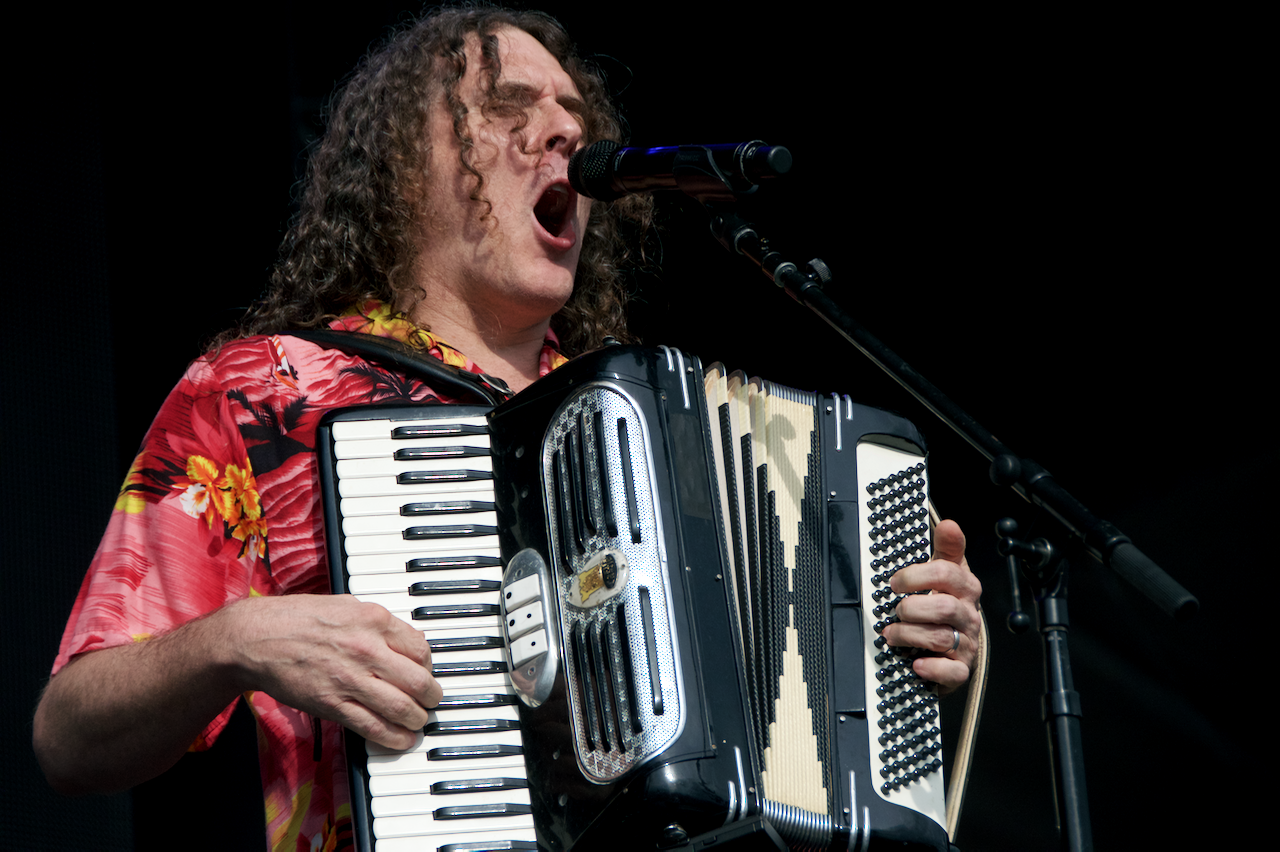
A cover of a song in which elements have been changed for humorous or satirical effect is called a parody. In most cases, parodies use the music of the original song but change the lyrics. A broader category, style parody, does not use the music of a specific song but recreates stylistic elements of a particular artist or genre.
Parodies are often made for comedic effect, and are common in the genre of novelty songs. Some artists use parody as a means of political commentary; American performer Randy Rainbow is well-known for creating song parody videos critiquing current political figures and events.
Eclecticism, Quotation & Adaptation: Summary
- Eclecticism is the combination of different, recognizable musical languages in a single composition.
- Eclecticism can be based on historical eras or genres, combining styles from different time periods into a single work.
- Eclecticism can also be cultural in nature, combining musical languages of different cultures into a single work.
- Cultural eclecticism can be respectful and celebratory, but can sometimes also represent cultural appropriation, which denigrates a particular culture's identity.
- Code switching involves an artist who is known for performing in one genre adopting the traits of another genre in a particular work.
- Crossover songs are those engineered to be successful among more than one popular genre's audience.
- Quotation is the use of someone else's music in a composer's work.
- Quotation which is done in a way that implies it is original work is called plagiarism.
- The use of another artist's recording within a recorded piece is called sampling.
- Artists who have used samples of other's work without securing the necessary legal rights to do so are often sued by the original artist for songwriting credit, royalties, or damages.
- Adaptation consists of the reworking of original material into a different form.
- A piece in the notated tradition which is rewritten for a different performing ensemble is called an arrangement.
- The performance or recording of a different artists' work in the popular style is called a cover.
- Adaptations of songs with elements changed for humorous or satirical effect are called parodies.