Minor Scales & Modes

.jpg)
In addition to the major scale, other heptatonic scales are commonly used in 12TET music, each with their own unique characteristics.
Modes
Each major scale is defined by two characteristics: the key signature, which indicates which notes are in the key, and the identification of a particular note as tonic.
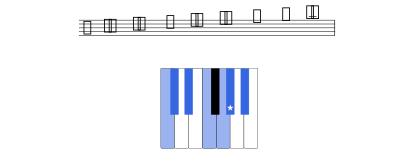
By using the same collection of notes but changing which note is treated as tonic, we create a different scale. This process of rotating a scale pattern to begin on a different note results in a related but different scale, called a mode of the original scale or key. Each of the six modes based on the major scale are given a specific name as shown in figure 2.
Because it is so commonly used in 12TET music, many listeners tend to hear a major tonality by default: to establish the tonality of a different mode, a composer must highlight the notes that differentiate the mode from a major scale.
Minor Scales
One of the most commonly used modes in 12TET music results from taking a major scale and using 6 as tonic. This scale is sometimes referred to as the aeolian scale but is most commonly called the minor scale. Where the major scale has half steps between 3 and 4 and between 7 and 1, the minor scale has half steps between 2 and 3 and between 5 and 6.
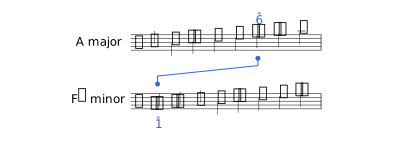
Each major scale has a relative minor scale with the same key signature, just as each minor scale has a corresponding relative major.
Comparing a minor scale to a major scale built on the same tonic highlights the differences between the two tonalities: in a minor scale, 3, 6 and 7 are lowered. Many people perceive this as a darker sound than major.
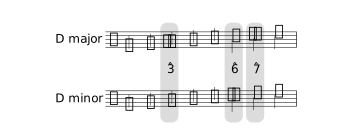
A minor scale with the same tonic as a given major scale is called the parallel minor.
Harmonic Minor
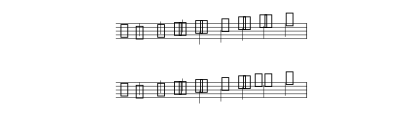
Unlike the major scale, the minor scale has a whole step between 7 and 1. Because this interval often plays an important role in chord resolutions and harmonic progressions, many composers choose to raise 7 by a half step to add more tension to the chords which use that note. This alteration, called raising the leading-tone, is traditionally done with accidentals in the music, and not reflected in the key signature.
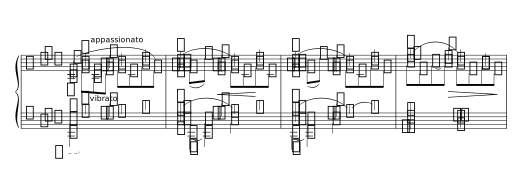
A minor scale that has a raised leading-tone is called the harmonic minor scale; in contrast, the unaltered version of the scale is called the natural minor scale.
Melodic Minor
The harmonic minor scale represents the collection of notes most often used to create chords for a piece in a minor key. When composers write melodies in minor, however, they often avoid the interval between 6 and 7, which spans one and a half steps and sounds dissonant.
To remove the large leap between 6 and 7, composers often make another alteration to the scale depending on the direction of the melodic line. For ascending melodic lines, a common technique is to raise 6 to 6, which reduces the interval to a whole step while retaining the raised leading-tone.
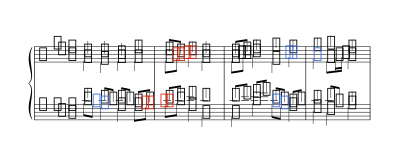
Descending melodic lines often do not need the tension created by the raised leading-tone, so composers instead move 7 back to 7 and use the natural minor scale.
Theorists illustrate these two options together as the melodic minor scale, which is usually shown in both ascending and descending forms.
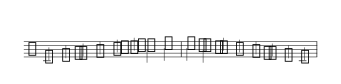
Natural minor, harmonic minor and melodic minor are tools used by composers when writing in minor, and are not considered tonalities or keys of their own.
Minor Modes
One of the most notable characteristics of the minor tonality is distance between 1 and 3, which is a half step smaller than in the major scale. Two other modes of the major scale have this same characteristic. These three modes are often considered collectively as minor modes.
Dorian
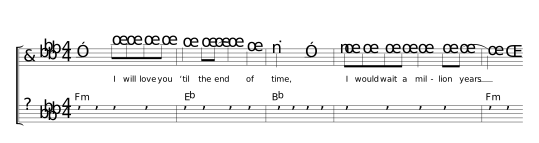
Using 2 of the major scale as tonic results in the dorian mode, which has half steps between 2 and 3 and between 6 and 7.
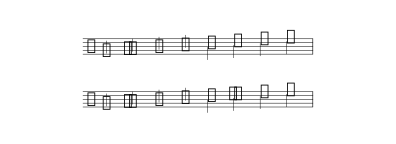
When compared with the natural minor scale, the Dorian scale has a raised 6. This note is the color tone for Dorian; when omitted, listeners will likely hear a natural minor or Aeolian tonal context.
Phrygian
The other minor mode based on the major scale is phrygian, which results from using 3 of the major scale as tonic. The Phrygian scale has half steps between 1 and 2 and between 5 and 6.
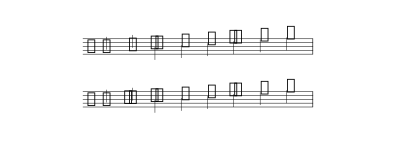
The color tone of the Phrygian scale is 2, which is lowered from its position in the natural minor scale. Because this note creates an unusual dissonance in relation to 1, the Phrygian scale is used less commonly than natural minor or Dorian modes.
Major Modes
Like minor, there are two other modes of the major scale which feature the larger distance between 1 and 3.
Lydian
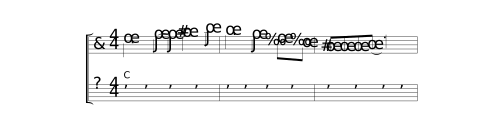
Using 4 of the major scale as tonic results in the lydian scale, which — like major — has a half step between 7 and 1, but also has a half step between 3 and 4.
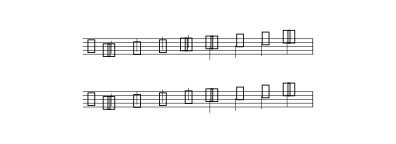
The color tone in Lydian is 4, which is raised in comparison to major.
Mixolydian
The other major mode results from using 5 of the major scale as tonic. This scale, called mixolydian, has half steps between 3 and 4 and between 6 and 7.
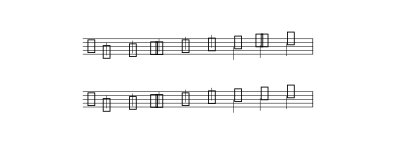
Mixolydian's color tone is 7, which is lowered in comparison to major. Because the term leading-tone refers to a half step below the tonic, the lowered 7 in Mixolydian — and other modes which have a whole step between 7 and 1 — is called the subtonic.
Locrian
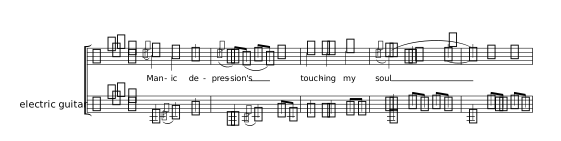
The remaining mode drawn from the major scale is locrian, which can be constructed by using 7 from the major scale as tonic, and which features half steps between 1 and 2 and between 4 and 5.
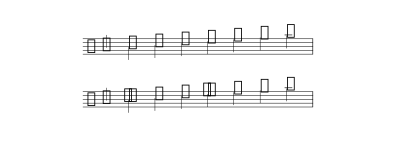
While Locrian has the same distance between 1 and 3 as the other minor modes, it is a very unstable tonality; it is difficult to distinguish its tonic note from an unresolved leading tone in the relative major. As a result, composers rarely use Locrian except as deliberate proofs of concept.
Minor Scales & Modes: Summary
- Modes are scales or keys created by changing the tonic in a given collection of pitches.
- The most commonly used modes are those based on the major scale.
- Because of its ubiquity, listeners often hear major tonality in the absence of notes unique to a different mode.
- A minor scale results from starting on 6 of the major scale.
- A minor scale with no alterations is called a natural minor scale.
- A minor scale with a raised 7 is called a harmonic minor scale, and is often used to build chords
- Composers often raise both 6 and 7 for ascending melodies and use the natural minor scale for descending melodies. A scale demonstrating these motions is called a melodic minor scale.
- Minor modes have the same distance between 1 and 3 as the minor scale, giving them a darker quality.
- The dorian mode is similar to natural minor, but with a raised 6.
- The phrygian mode is similar to natural minor, but with a lowered 2.
- Major modes have the same distance between 1 and 3 as the major scale, giving them a brighter quality.
- The lydian mode is similar to major, but with a raised 4.
- The mixolydian mode is similar to major, but with a lowered 7.
- The locrian mode shares some characteristics with other minor modes, but is unstable and rarely used.