Musical Theatre
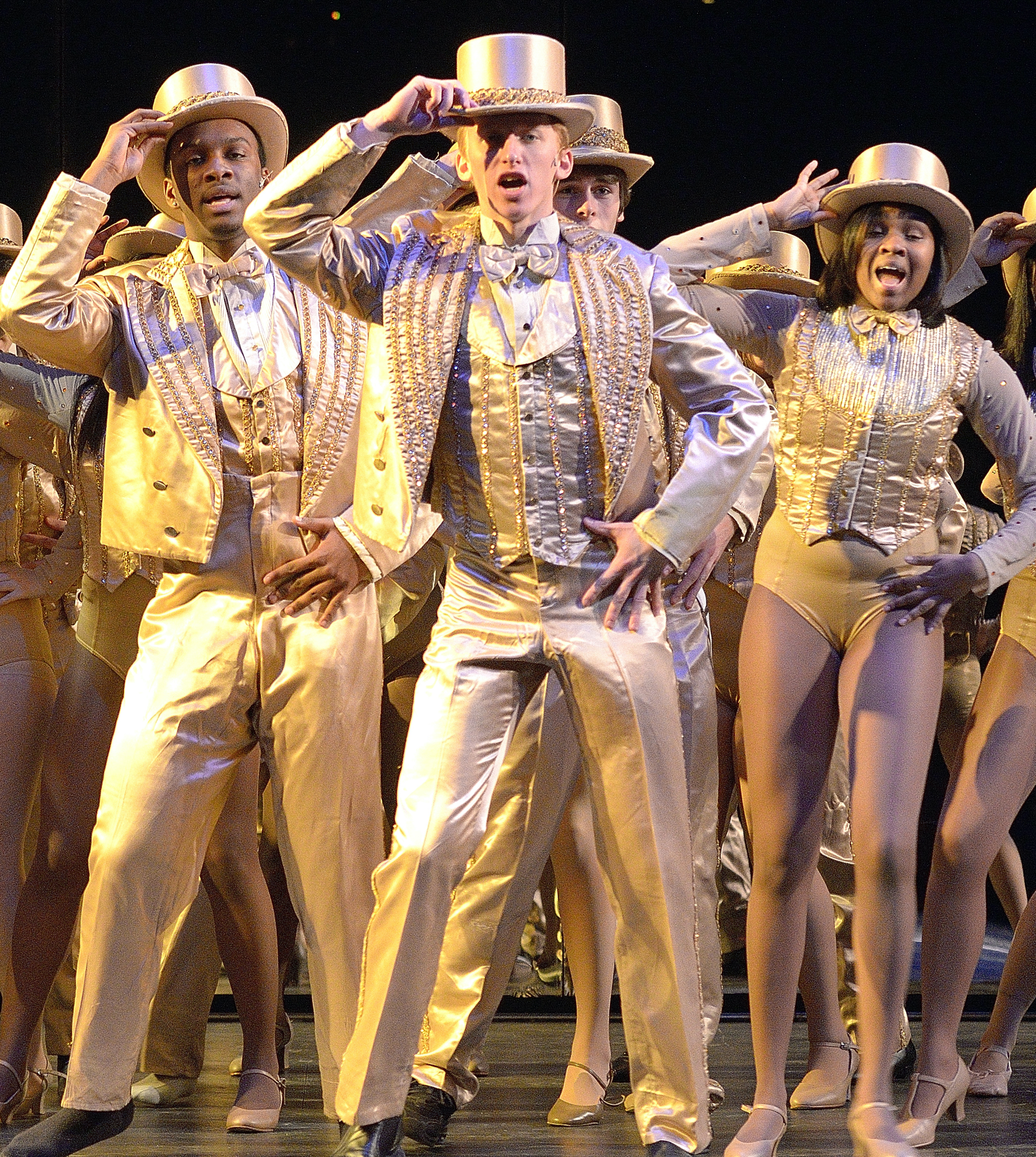
Musical theatre productions, generally referred to as musicals, are similar to operas in structure, but are usually designed to appeal to mainstream audiences through the use of popular music styles.
Musical Theatre
Delineating Opera and Musical Theatre
Most musicians recognize a difference between the genres of opera and musical theatre. Popular works like Stephen Schwartz and Winnie Holzman's Wicked and Jonathan Larson's Rent, produced intentionally for environments like New York City's Broadway and London's West End, are near-universally considered to be musical theater productions; works like Wolfgang Amadeus Mozart's Don Giovanni and Guiseppe Verdi's La Traviata, which were written for aristocratic audiences in 18th and 19th-century Europe, are considered to be quintessential operas.
Both formats involve the telling of a story through music and dialogue; the use of consecutive individual works within a sequence of scenes and acts; a variety of types of music, including solo or small-group vocal works, choruses and instrumental features; and the use of staging, costumes, set design, and dance. In fact, modern musical theatre evolved from the operettas of the 19th century.
However, it can be difficult to create an exact taxonomy for what is usually a vague, gut-based differentiation. Categorizations based upon subject matter, ensemble size, language, production values and intended audience can all be defied by examples which push the envelope either intentionally or otherwise. One possible definition is that opera tends to be music-centric, whereas music theatre tends to be lyrics-centric, but even with this method it is difficult to classify works such as Leonard Bernstein and Stephen Sondheim's West Side Story, a work whose musical score is revered even as a standalone symphonic work, but which is not usually considered an opera.
Unlike opera, musical theatre tends to embrace popular musical styles, with more recent musicals utilizing instruments like drum sets and synthesizers. Contemporary plots and settings are common, with stories drawn from popular culture, including current literature, television and cinema.
The Musical Theatre Business
Like operas, musicals are usually written in preparation for a specific premiere performance, and involve the collaboration of composers, directors, choreographers, conductors and many others. However, while opera productions generally involve only three to six performances over the course of a week or two, a musical theatre production will generally take sole residency in a theatre for months or even years of nightly performances.
American musical theatre has a specific geographic center: New York City's Theater District. Theaters located within this area which seat audiences of 500 or more are collectively known as Broadway, and productions which take residency there are considered to have achieved the highest metric of success for American musical theatre. Smaller theaters in and around the Theater District which host musical theatre productions are referred to as off-Broadway; in some cases, successful off-Broadway productions will reopen on Broadway. Many other countries have similar loci for musical theatre, such as London's West End, usually located in the country's largest metropolitan areas.
The length of a Broadway run is governed by ticket sales; productions will close when ticket sales can no longer support the cost of the production. At that point, many successful Broadway shows will embark on a national or international tour, traveling to other metropolitan areas for limited runs of a few nights or several weeks.
Once a production's original run and tour are complete, the musical may be made available for licensing by other professional, educational, or amateur groups. To stage a musical, a group must rent the music from the publisher and pay a licensing fee. Publishers will sometimes also license specialized arrangements of the musical intended for student theatre groups.
Elements of Musical Theatre
Like operas, musicals are comprised of many smaller, individual works, sometimes connected as segues. Most modern musicals follow a two-act structure with a single intermission. While musical theatre pieces have the same variety of performing forces as operas, including solos, duets, trios, ensemble works and instrumentals, there are several common types of pieces that are defined by characteristics like content and placement within the larger structure.
Production Number
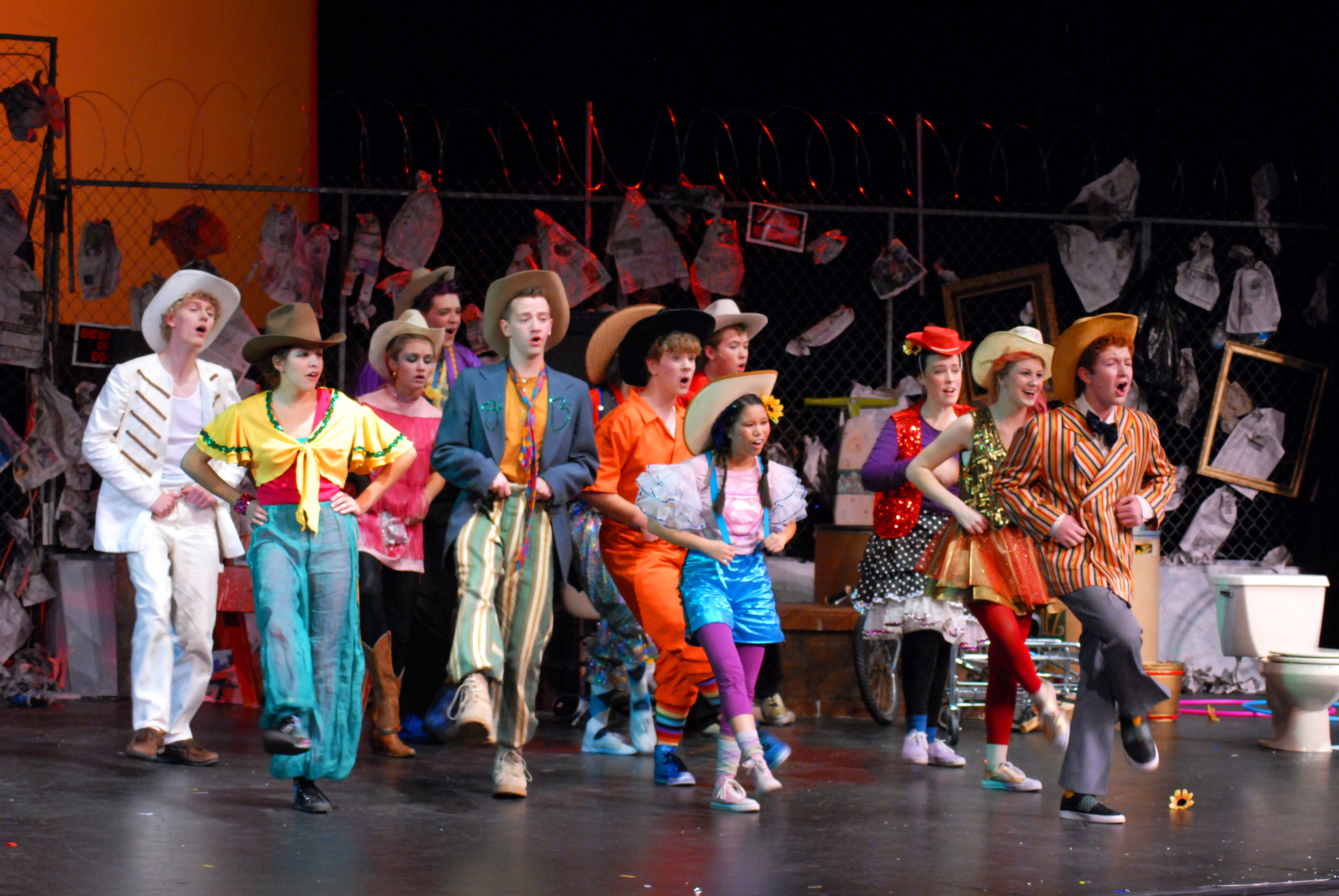
A production number is a piece in a musical that uses all or most of the show's cast. Unlike opera choruses, which tend to be more homogeneously choral in texture, a production number commonly incorporates solo performances of lead roles.
While production numbers can be placed throughout the musical, there are three places were they are most common: as an opening number, a piece at the beginning of the musical which introduces the characters, setting, and initial plot points; as a first act finale, a piece which reflects on the current dramatic tension before the intermission and second act; and the finale, the piece which ends the show.
Feature
A feature is a vocal piece in a musical performed by a single character. It corresponds in some ways to the operatic aria, and often includes a similar pausing of the plot. Features can be used to introduce characters or accentuate their specific circumstances, reactions or emotions. While the feature should focus on one character, they can be production numbers, with other cast members in subsidiary singing roles.
"I Am" Song
An "I Am" song is a piece, usually a feature, which provides an introduction to a character, generally describing the character's situation before the events of the drama unfold. This type of piece usually happens early in the musical, and is almost only limited to the leading roles of the story. In some cases, an "I Am" song can be a production number, with the rest of the company providing backup vocals.
Occasionally, a musical can have a "We Are" song for a group of people, such as Welcome To The Rock, the opening number for Irene Sankoff's and David Hein's 2013 musical Come From Away, which features the citizens of Gander sing about what they were doing on the morning of the September 11 terrorist attacks that diverted planes to their airport.
"I Want" Song
Like the "I Am" song, an "I Want" song is usually a feature by a leading role. While it can serve simultaneously as an "I Am" song by providing initial character exposition the "I Want" song specifically focuses on the singer's unsatisfied desire, the quest for which comprises further plot points to unfold. An example of this is The Intermission Song, the opening number of Michael R. Jackson's 2018 musical A Strange Loop, in which the main character introduces both his situation of working as a Broadway usher and his desire to write a successful musical himself.
Comedy Song
A comedy song is a number, often tangential to the main plot, which is included for comedic effect. In many cases, this song is a feature for a supporting role who provides comic relief, like The Pants Song from Joe Iconis' 2015 musical Be More Chill, in which the main character's recently divorced father accepts that he must get dressed to go rescue his son. A comedy song can provide some levity in an otherwise serious story; an example of this is Sincerely, Me from Benj Pasek's and Justin Paul's 2016 musical Dear Evan Hansen, in which the title character and his friend forge backdated emails to and from a deceased classmate.
Charm Song
A charm song is a song designed to provoke audience sympathy for a character. This type of song is often used for supporting roles, which might have limited stage time to make an impression on the audience. An example of a charm song is Girl Scout, which opens the second act of Eddie Perfect's 2018 musical Beetlejuice and features Skye, a girl with a congenital heart defect, preparing to sell cookies at the door of the fully-haunted Deetz household.
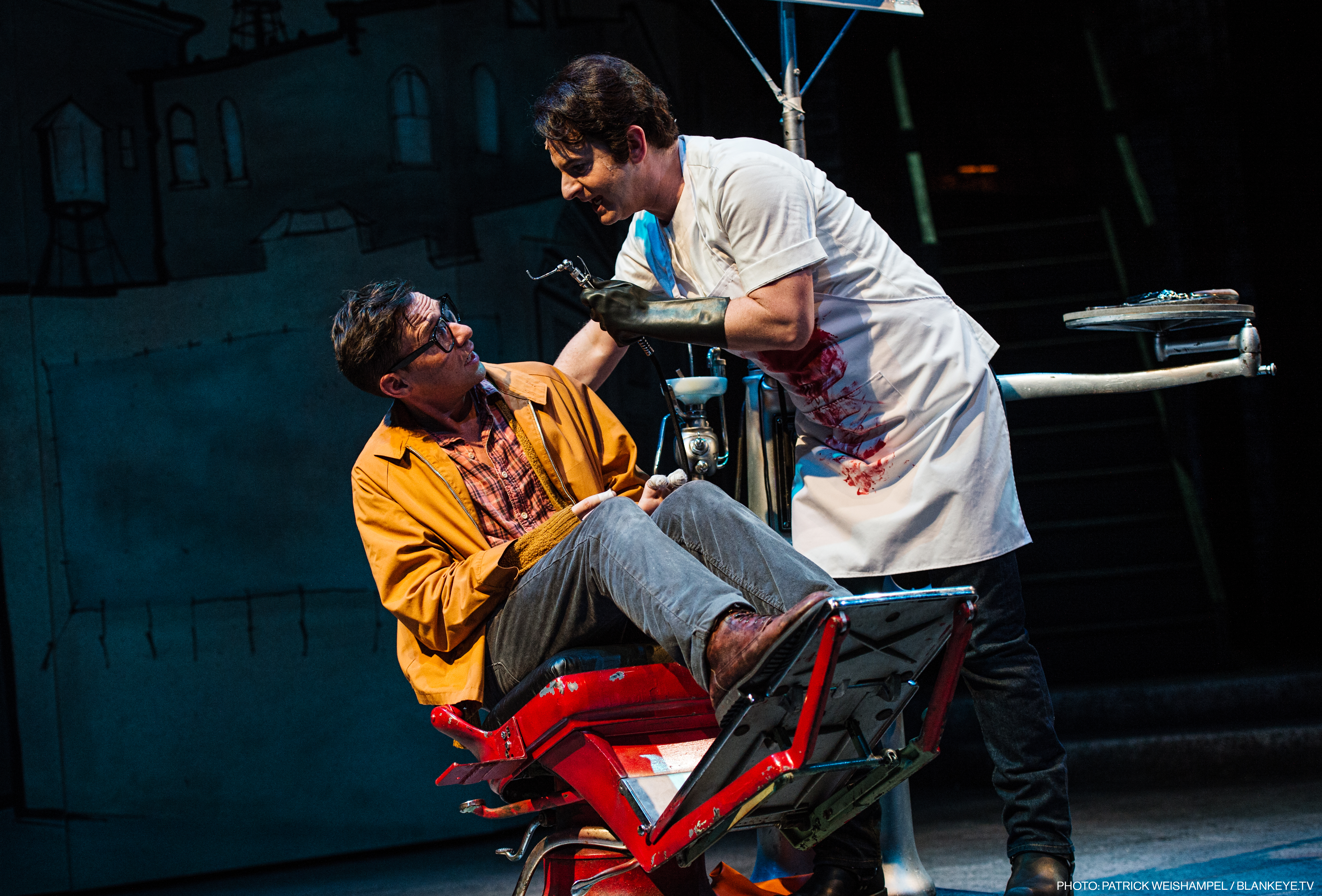
Musicals can also include anti-charm songs, designed instead to prevent audience sympathy for a character. Dentist from Alan Menken's and Howard Ashman's 1982 musical Little Shop of Horrors is an example of this song type, introducing the sadistic boyfriend of Audrey, one of the leading roles.
Eleven O'Clock Number
With most musicals constructed of two acts, a very common technique is to have a dramatic, emotionally-charged song in the second half of the second act as the plot of the drama is making its final push into the finale. This song is called an eleven o'clock number, based on the time it often occurs in evening performances. It is generally sung by one of the lead characters and sometimes portrays an important turning point of the plot. In Stephen Schwartz and Winnie Holzman's 2003 musical Wicked, the song For Good — sung by former rivals Glinda and Elphaba as they reflect upon their friendship and part ways — serves as the musical's eleven o'clock number.
Musical Techniques
Reprise
A common technique in musical theatre is a reprise, in which a piece incorporates music and sometimes lyrics from an earlier piece in the show. An entire piece can be comprised of a reprise, or an otherwise new piece can include a short reprise as a section. In Lin-Manuel Miranda's 2015 musical Hamilton: An American Musical, for example, a vocabulary of short motives are collected and sometimes reprised in rapid succession as the plot progresses.
Composers will sometimes reprise the opening number in a musical's finale as a means of providing a sense of cohesion to the musical as a whole. In Laurence O'Keefe's and Nell Benjamin's 2007 musical Legally Blonde, the final scene reprises the opening number and combines it with a passage which appears at pivotal moments throughout the show.
Quodlibet
A common type of reprise is a production number which contains themes from many different songs placed in succession or counterpoint, called a quodlibet. For example, in Claude-Michel Schönberg's and Alain Boublil's 1980 musical Les Misérables, reprises from several notable songs are combined in the finale of the first act as a means of drawing together several simultaneous stories.
Types of Musicals
The most common type of musical is a book musical. While these productions are sometimes adapted from existing books — as with Chris Miller's and Nathan Tysen's 2015 musical Tuck Everlasting, which was based on a 1975 novel by Natalie Babbitt — the term is also used for original musicals. In all cases, the story component for a musical, whether it was written originally for the production or adapted from some other source, is generally referred to as the book.
"Golden Age" Musicals
Before the 1940s, most musical theatre productions were revues: musical productions involving staged performances and dancing, but which did not feature consistent characters or a cohesive plot. After the second world war, tightly integrated dramatic productions became popular. American composer Richard Rodgers was particularly prolific in the genre, producing 29 musicals with lyricist Lorenz Hart and 12 musicals with lyricist Oscar Hammerstein II, including Oklahoma!, Carousel, South Pacific, The King and I, and The Sound of Music.
The success of the format continued through the 1960s with the productions of Stephen Sondheim, who served as both composer and lyricist in productions like A Funny Thing Happened on the Way to the Forum, Sweeney Todd: The Demon Barber of Fleet Street, and Into the Woods. This era of musical theatre, which waned in the 1970s with the advent of more rock-influenced productions, is often referred to as the "Golden Age" of the genre.
Rock Musicals
In the early 1970s, several musicals became popular which featured more rock-oriented styles and performance techniques, including the use of amplified instruments and drum kits in the orchestra. Three early examples used biblical stories: 1970's Jesus Christ Superstar and 1972's Joseph and the Amazing Technicolor Dreamcoat, both by English composer Andrew Lloyd Webber and English lyricist Tim Rice, and American composer Stephen Schwartz's 1971 musical Godspell.
Popular music influences have continued to appear in musical theatre into the 21st century, with most contemporary Broadway productions making use of synthesizers and drum sets. Other popular styles have been explored, such as the musicals of American composer Lin-Manuel Miranda incorporating hip hop and Latinx styles, and Amerian composer Dave Malloy's 2012 musical Natasha, Pierre & The Great Comet of 1812 exploring electronic dance styles.
Film Adaptations
Musicals based on previously released films became popular in the early 21st century, with successful productions like Jeff Richmond's and Nell Benjamin's 2017 musical Mean Girls and Sara Bareilles's 2015 musical Waitress. Adaptations might stay very close to the movie's plot, or alter it substantially, as with Eddie Perfect's 2018 musical Beetlejuice.
Jukebox Musicals
Another popular format for musicals in the early 21st century is that of the jukebox musical where the music of a specific artist or genre is compiled to create a stage production. Though this format draws from the early-20th century musical revues, jukebox musicals generally feature a plot and cast of characters as a narrative device to connect the selected songs. In some cases, the plot may be a biography of the featured recording artist, as with 2013's Beautiful: The Carole King Musical. Other jukebox musicals set music to an original story: 1999's Mamma Mia!, which features the music of Swedish pop group ABBA, tells the story of a bride trying to identify her birth father before her wedding, while 2015's Head Over Heels features the music of American rock group The Go-Go's in a romantic comedy set in 16th-century England.
Musical Theatre: Summary
- Musical Theatre is similar to opera but with a heavier focus on the story, and a tendency to use more contemporary musical styles.
- While many productions fall clearly into the genre of opera or musical theatre, some works draw characteristics from both genres and are more difficult to categorize.
- Musical Theatre tends to focus on single production companies producing extended runs of performances. In the United States, these performances center in the Theater District of New York City, known as Broadway. London's West End is a similar performance center in the United Kingdom.
- Most musicals follow a two-act structure, and feature common categories of songs:
- Production numbers, which feature all or most of the show's cast performing on stage;
- Features, songs performed by a single character, much like an opera's aria;
- "I Am" songs, features in which a character introduces themselves to the audience;
- "I Want" songs, features in which a character shares their desires;
- Comedy songs, songs often sung by a secondary character who provides comic relief;
- Charm songs, songs which encourage the audience to feel sympathy for a (usually secondary) character; and
- Eleven O'Clock numbers, emotionally-charged features which take place during the latter part of the second act.
- Musicals often make heavy use of reprise, the restatement of a musical theme from earlier in the show to draw dramatic or emotional connections.
- Many musicals can be classified into different, sometimes overlapping, types:
- Book musicals are musicals with original stories or stories adapted from previously published literary works.
- "Golden Age" musicals are popular musicals written in the 1940s, 1950s and 1960s which continue to be performed regularly today.
- Rock musicals first gained popularity in the 1970s and feature more contemporary popular styles and instrumentation.
- Film Adaptations are musicals which retell or reimagine stories from popular films.
- Jukebox musicals are musicals which use music from a popular recording artist, with biographical plots or original stories.