The Music Business

Writing music is often driven by a personal desire for self-expression. As a result, performing one's own works, or hearing them performed and appreciated by others, is usually a uniquely rewarding experience. For many, however, music composition is a livelihood, and the creative process can be influenced, for better or worse, by economics.
Historical Roles of the Composer
Composition as a vocation is by no means a new concept; people have supported themselves by writing music — though usually also by performing music — for centuries.
Church Composers
Many composers throughout history have pursued their craft while employed by a church as a music director. In this role, they are often responsible not only for writing music but directing church choirs and playing organ. Due to the centrality of the church to public life in the Medieval and Renaissance Eras, these positions could be well-paying and prestigious. Composers were, however, required to work within the boundaries of the liturgy, which could sometimes be very restrictive.
Court Composers
For centuries, royal courts in Europe would employ a large staff, including musicians to organize and perform for official functions. This would sometimes include one or more composers. Some of the well-known composers of the Classical era, including Wolfgang Amadeus Mozart, worked as court composers.
Independent Composers
Some composers worked independently, supporting themselves by giving performances, teaching music lessons, and receiving commissions — requests from others for original compositions in exchange for a fee. After gaining fame as a court composer, Ludwig van Beethoven was able to support himself through performances and donations from wealthy patrons. Scott Joplin was able to take advantage of the popularity of ragtime music to support his family with royalties from published music, as well as performing and giving piano lessons.
Singer-Songwriters
Many successful musicians begin their careers as singer-songwriters: independent performers who perform their own works and music written by others, and who either accompany themselves or collaborate with other musicians as a band. Even with strong local followings, this is almost never financially lucrative, so early-career singer-songwriters generally pursue their vocations while working to support themselves with other full-time or part-time jobs.
Especially in larger population centers, there are often many, many singer-songwriters competing for performance opportunities and local fanbases, so individual artists tend to seek out ways to set their music apart, while remaining close enough to stylistic norms to prevent from alienating listeners.
As singer-songwriters become popular and more successful, the need for collaboration increases — not only with other musicians, but with people in supporting and related fields to whom they can delegate important work.

.jpg)
Live Performance
The simplest form of live performance for a singer-songwriter is busking, performing in public areas for passersby. Financial compensation is minimal; musicians will sometimes leave a cup, hat or guitar case to collect money from listeners if they wish to donate. A busker's set may include a mix of original works and covers: performances of other artists' works, sometimes interpreted in ways that align with the performer's personal style.
Occasionally, busking will yield other performing opportunities, through other musicians seeking collaborators or business owners looking for live music for their businesses. More often, these other performing opportunities are generated through networking with other musicians and agencies.
Venues
The most beneficial performing opportunities for early-career singer-songwriters occur as a result of business owners hiring live musicians for their establishments. These businesses include restaurants, bars, and nightclubs. Other performing opportunities can include festivals, private parties, and "open mic nights", where musicians perform for free without prior booking.

As singer-songwriters become more popular and gain regional, national and international followings, they have access to larger venues, including concert halls, outdoor amphitheaters, and sports arenas, which contract with the musical act to split profits from ticket sales.
Roles associated with venues include:
- Event Management. A venue's event manager books acts to perform in the venue and negotiates contracts with performers regarding ticket sales and required preparations.
- Crew. A venue's crew manages stage management, lighting and sound.
- Box Office. The venue's box office manages tickets and admission for concerts, and will often provide local publicity, such as advertising and promotion in local media.
Touring
In order to expand their fanbase, singer-songwriters might plan and undertake a tour, a sequence of performances at venues outside of the artist's local area. For early-career musicians, this may involve the use of personal transportation and low-cost hospitality such as motels or staying with friends or family. Successful musicians with large followings can invest in more expansive tour infrastructure, such as tour busses for personnel and trucking for equipment.
For early-career musicians, money earned on a tour may not cover the cost of transportation, room and board, but the increased fan base can have long-term benefits. For successful full-time recording artists, however, touring is often the primary source of financial gain, as ticket sales generally far exceed money earned by the musicians through record sales.
Roles associated with tours include:
- Tour Manager. The tour manager oversees all aspects of the tour on behalf of the artist.
- Booking Agent. The booking agent will coordinate with event managers at venues to plan performances and coordinate contracts, ticket sales and publicity.
- Crew. A tour will often have its own crew for stage management, lighting and sound. Roadies manage equipment for the tour, such as amplifiers, lighting rigs and instruments. Drivers provide transportation and maintain vehicles.
- Touring Musicians. An artist may hire additional musicians to perform live. Larger acts will often coordinate with less-popular, up-and-coming acts as opening acts which warm up the crowd for the primary performers and provide additional value for the audience.
- Dancers and Choreographers. Depending on the style of music, artists might feature dancers on stage to add an entertaining visual component to the performance.
- Hair, Makeup and Wardrobe Specialists. Popular recording artists might enlist professionals to assist with their physical appearance while on stage.

Recording
A singer-songwriter may choose to record their music to further expand a fanbase built from live performances. In some genres, the creation of recorded music is the primary focus, and live performance is rare or comes as a result of a successful recording effort.
A musician who creates and sells recorded music is commonly referred to as a recording artist.
Whereas a singer-songwriter's live performance might combine original compositions and covers, recordings are almost always limited to original works, since recording other artists' works can involve securing permissions and paying royalties.
Live music is ephemeral, and successive performances of a single work can vary widely. Recorded tracks, on the other hand, benefit from the artist's ability to record multiple takes, overdub parts, and carefully engineer and master the final product.
The Studio
Music can be recorded in any environment, and live recordings are often made during concerts, allowing the listener to feel the energy and intimacy of a live performance. To craft a professional-sounding recording, however, it is necessary to have proper recording equipment and a tightly-controlled acoustic environment.
Recording studios are generally designed to have soundproof spaces so sounds from adjacent rooms are not heard on recorded tracks. These spaces will be covered with absorbent wall coverings and acoustic baffling to prevent sound waves from reflecting off the walls. This produces a "flat" recording which can be more easily manipulated and combined with other recorded tracks.
Recording studios will also have a wide variety of different microphones to meet varying needs. These microphones will be connected to a mixer in a separate control room, allowing multiple tracks to be combined in different ways, or — more commonly — recorded one track at a time.
A great deal of the work that takes place in the recording studio happens after the actual recording takes place. Once tracks are recorded, they can be modified with filters and effects. They are then mixed in a way that provides balance among the different parts, and mastered by applying broad enhancements to the combined mix.
Roles associated with the studio include:
- Producer. The producer oversees the recording process, directing the musicians and other staff through the recording and mastering process. Sometimes the musical artist acts as their own producer, and in other cases an artist will collaborate with an experienced producer to work toward a particular goal for the recording.
- Recording Engineer. The recording engineer sets up, operates and maintains the equipment in the studio. They manage the actual recording, handling the technical aspects of the recording process so the musician and producer can focus on general concepts.
- Session Musicians. A studio will often have working relationships with musicians who are able to sight-read quickly and adapt to many different musical styles. For example, a drummer might be hired by the producer to provide a drum track for a musician who does not play drums.
- Arranger. In some cases, a producer might enlist the service of an arranger to write parts for backing vocalists or instrumentalists on a particular track.

The Home Studio
Modern musicians can replicate many of the processes which normally take place in the recording studio's control room using a digital audio workstation or DAW. These software applications provide an interface similar to the hardware present in the recording studio's control room — in fact, many modern studio mixers are simply hardware interfaces for a powerful DAW used by the recording engineer. In many cases, a DAW can be used on a laptop computer, allowing an independent musician to carry a portable studio along with them.
Even with the capability to add filters and effects, and to mix and master recordings, it is still necessary to record live tracks in an acoustically appropriate environment. While not as finely tuned as a professionally-designed studio space, a reasonable home studio can be created with insulation to block out external sounds and wall hangings to provide acoustic baffling. Additionally, an independent musician may need to invest in high quality microphones and audio interfaces to connect to their computer.
Distribution
Until the end of the twentieth century, distribution of recordings was a significant challenge for early-career recording artists. The advent of compact cassette tapes and later writeable CDs allowed independent musicians to create their own recordings and even albums. Often these would be sold at live performances or through local record stores.
With the rise of the internet — and, more importantly, widespread high-speed internet access — musicians had a means of distributing their music worldwide in digital quality. Services like Napster and Limewire provided a means of sharing one's own music, but these services encountered significant legal challenges as services where copyrighted material was often distributed without permission. Modern services like Bandcamp and SoundCloud provide a platform for independent composer/performer to share or even sell their work widely, and streaming services like Spotify and Apple Music will promote songs to their users based on popularity and algorithmically-determined preferences.
Management
As a singer-songwriter builds their business through performing and recording, they often need to assemble a group of professionals to whom they can delegate tasks which are time-consuming or which require specialized expertise. These roles might include:
- Manager/Agent. Early-career singer-songwriters can join an agency: a business which specializes in promoting and advocating for musical acts. These services might include working with local venues to organize performing opportunities, providing ways to collaborate with other artists in the agency, and working with radio stations and streaming services to popularize recorded tracks.
- Licensing Representative. In addition making money from the sale of albums, singer-songwriters can join a licensing agency like ASCAP or BMI to receive royalties when their songs are used in broadcasts or other public venues. A licensing representative will ensure that royalties (which are almost always minimal) are paid to composers in exchange for a periodic membership fee.
- Accountant. A singer-songwriter might hire an accountant to manage expenses for performing and touring, ticket sales, royalty payments, and taxes.
- Attorney. A singer-songwriter may choose to retain the services of an attorney to assist with contracts with venues and staff, and advise on matters pertaining to copyright and mechanical licensing. Often legal assistance is provided through membership in an agency.

The Recording Industry
For many singer-songwriters, the benchmark for success in the field is being offered a contract with a record company to produce one or more albums. This type of a contract, known as a record deal, involves the record company providing recording services, distribution and publicity for the artist. In return, the record company generally retains an exclusive license to distribute and sell the artist's music for a specific period of time. Musicians receive a small amount of royalties from record deals, but benefit from the publicity and promotion the record company provides, which build audiences for live performances.
Because record companies have a responsibility to shareholders to be profitable, they may have an interest in the creative process to ensure a final product that will be successful. In many cases, these collaborations with the singer-songwriter can be mutually beneficial, but creative differences sometimes arise.
Studio Production
As part of a record deal, a recording artist is required to deliver a master — a completed, fully produced recording of the album — for the record company to distribute. The record company will provide the recording artist with an advance payment of future record sales, which is typically used to cover the costs of the recording process.
For recording artists who are just starting out, the record company may suggest or provide studio arrangements, producers and other collaborators to guide the recording process in a way that helps ensure a successful final product.
Distribution
The most important benefit of a record deal for an artist is having access to the record company's distribution resources. This includes a variety of roles, including:
- Artists and Designers. Photographers and graphic artists work with the record company and recording artist to design album covers, inserts and other necessary components for digital and physical releases.
- Publisher A music publisher manages copyrights and royalties for the composer. They work with licensing agencies to ensure that composers receive royalties from broadcasters and other entities, and pursue cases of music piracy: the unauthorized distribution of recorded music.
- Manufacturer. A manufacturer handles the mass production of physical media, such as vinyl albums, compact discs, and their packaging.
- Physical Distributor. The distribution of physical media involves providing copies of the album in physical format — generally compact discs and vinyl LPs — to retail outlets such as record stores, department stores or internet retailers. This involves the coordination of shipping and warehousing, and may involve negotiations regarding pricing and store display.
- Streaming Distributor. A streaming distributor coordinates with online streaming services to license the digital media for streaming, and may include negotiations regarding promotion within the streaming service.


Advertising
In order to ensure success for their investment, record companies have broad advertising networks. Roles in this area include:
- Marketer. A marketer manages the promotion of the album itself, working with print and broadcast media to advertise the album.
- Publicist. While the marketer focuses on the music, a publicist focuses on the artist, promoting the artist's brand and coordinating public appearances and social media.
- Promoter. A promoter coordinates live performances. Promoters are often free agents, and will work with venue event managers and an artist's booking agent to oversee all aspects of a particular performance.
- Music Supervisor. A music supervisor coordinates placement of recorded music in movies and television, providing more exposure for the artist.
- Merchandiser. A merchandiser oversees the production of related materials to promote the album and/or artist, such as posters, clothing, and other products.

Management
Record companies can range from small, local organizations to giant, multinational conglomerates. Large record companies are often publicly traded on stock exchanges and have management executives and boards of directors, as well as expansive administrative support staff.
These organizations will also have a department which specializes in the discovery and recruitment of new recording artists. This department, commonly referred to as Artist & Repertoire or A&R, will employ talent scouts who attend performances of independent artists looking for potential new clients, and market researchers who analyze listening habits and convene focus groups to identify new trends.

Music for Film and Television
Music can often be play an integral part of movies and television, from main themes to subtle music cues which underscore the drama. Composers work closely with producers and directors to make creative decisions regarding the music's role in the final product, and are generally given a composer's copy — a version of the film or episode that has been edited for time, but which is missing final sound mixes, foley, and special effects — in order to write and record the music. Composition for film and television can span a wide variety of genres depending on the needs of the director and producer.
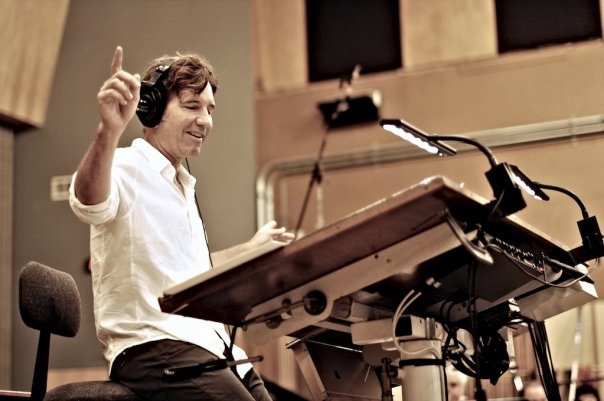

Composers for television often work on very tight schedules, composing and recording music for an episode in just a few days. Other roles related to film and television music include:
- Orchestrators. Composers will often write music in shorthand, perhaps on a grand staff, with margin notes and other indications regarding orchestration or expression. They will send these drafts to orchestrators, who specialize in interpreting the composer's wishes and who create full scores.
- Copyists. The orchestrator will then deliver the full score to copyists, who create individual parts for each performer. Once done by hand using a broad-nib pen, this process is now often automated using notation programs like MuseScore and Finale.
Public Arts & Academia
Some composers focus on writing new music for orchestras and other professional performing ensembles. Music written for these groups is more likely to challenge expectations and genre norms, drawing a contrast with traditional repertoire. Composers in these positions are often affiliated with a university, where they may teach composition and other related fields. Roles in these field include:
- Composer-in-residence. A composer-in-residence is a composer professionally employed by a performing ensemble such as a symphony orchestra. These positions are generally temporary, with different composers rotating in to write new material for the ensemble.
- Composition Professor. A composition professor teaches at a college or university. They may hold individual lessons with composition students, and teach traditional classes in composition and related fields like music theory and aural skills. In addition to teaching, most professors are expected to pursue scholarship in the form of publishing compositions, articles and other works, presenting at academic conferences and organizing public performances of their works.
The Music Business: Summary
- Composers have historically found different ways to support themselves financially.
- Composers have held church positions where they compose music for the liturgy while performing or directing other performers.
- Some composers worked in the courts of royalty, working to provide music for official functions.
- Other composers worked as independent musicians, earning money from performances, published works, or teaching private lessons.
- Modern singer-songwriters often earn money by performing their own works along with works by others.
- Live performances can include busking or performing in different venues.
- Roles associated with performing venues include positions in event management, crew, and box office.
- As artists expand their fanbase, they may undertake a tour, a sequence of concerts across a larger geographical area.
- For more successful artists, touring can be the primary financial support of their enterprise.
- Roles associated with tours include tour manager, booking agent, crew, touring musicians, dancers, choreographers, hair stylists, makeup artists and wardrobe stylists.
- In addition to performing live, singer-songwriters can expand their fanbase — and increase interest in live performances — by selling recordings.
- High quality recordings are created in a recording studio, a facility which is equipped and acoustically designed for optimal results.
- Roles associated with the recording studio include producer, recording engineer, session musicians, and arranger.
- With modern technology, independent artists can create studios at home, based around specialized digital audio workstation software.
- Independent artists can use the internet for distribution of their recorded works, using services such as Bandcamp and SoundCloud.
- As artists become more successful, they might employ others to assist them.
- Roles associated with artist management include manager/agent, licensing representative, accountant, and attorney.
- Successful singer-songwriters sometimes enter into contracts with a record company, which gives them access to a much wider, sometimes global, distribution model.
- As part of a record deal, artists will generally be given an advance on record sales, intended to offset the costs of recording.
- For early-career artists, record companies may provide studio arrangements or a producer to guide the process.
- Roles associated with a record company's distribution arm include visual artist, graphic designer, publisher, manufacturer, physical distributor, and streaming distributor.
- Roles associated with a record company's advertising arm include marketer, publicist, promoter, music supervisor, and merchandiser.
- Record company management also includes administrative support and A&R, a department responsible for identifying new talent and performing market research to analyze new trends.
- Composers can work closely with producers and directors to create music for film and television, which can span many different genres and can often require a very tight schedules.
- Roles associated with film and television music include orchestrator and copyist.
- Composers can also find careers working as a composer-in-residence for a professional performing ensembles such as a symphony orchestra. Composers working in this genre are also often employed as professors at a college or university, teaching lessons and classes and publishing compositions or other research.