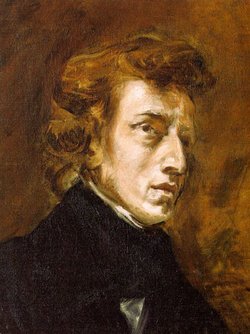
on YouTube.
39.1 SOME GENERAL OBSERVATIONS ABOUT THE MUSIC:
- Tonality: E major
- Vocabulary: chromatic
- Texture: piano, 4-voice
- Sonorities: diatonic and chromatic triads and tetrads
- Time organization: 4/4, with polyrhythms
- Form: period of three similar phrases [a a' a'']
39.2 FIRST PHRASE [a]
- Phrase design:
- Standard 4-measure phrase
- Polyrhythms, with the simple and compound subdivisions souding simultaneously
- Half cadence, but contains a 7th and is in first inversion
- Schenkerian graph:
(Roman numerals are IMPLIED harmony)
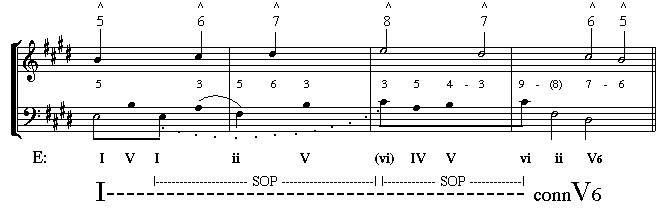
- Roman numerals:
The implied harmony in the graph above gives a fairly accurate view of what really happens harmonically.

39.3 SECOND PHRASE [a']
- Phrase design:
- Standard 4-measure phrase
- Similar material to first phrase
- Half cadence, but dominant occurs late in the last measure
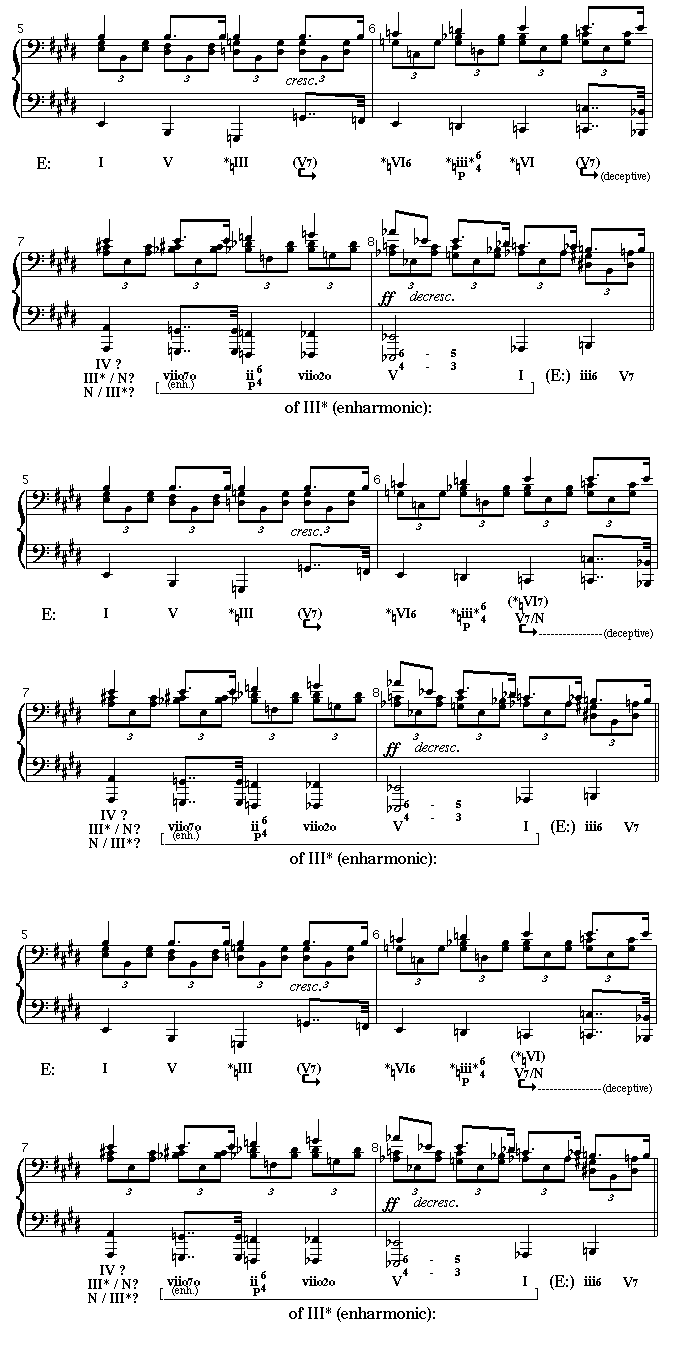
- Schenkerian graph:
(Roman numerals are IMPLIED harmony)
Some of the pitch areas are respelled enharmonically to show their actual function within the excerpt.

- Roman numerals:
The implied harmony in the graph above gives some information of what actually happens. but Chopin presents some interesting surprises, particularly beat 1 of m. 7: the harmony simply cannot be explained adequately. In the overall context of the global key, it is subdominant, but the context leading into it contradicts that explanation, and the context following it provides yet another contradiction.
39.4 THIRD PHRASE [a'']
- Phrase design:
- Standard 4-measure phrase
- Similar material to first two phrases, combines to make a 3-phrase period
- Perfect authentic cadence (the only real cadence in the piece)
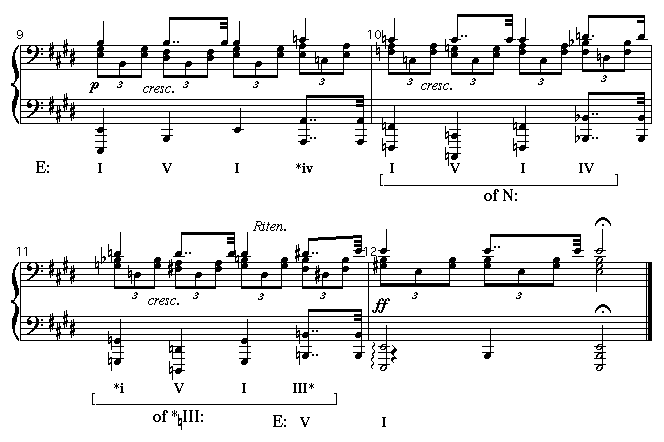
- Schenkerian graph:
(Roman numerals are IMPLIED harmony)

- Roman numerals:
The implied harmony above is quite accurate in predicting the actual harmony.
39.5 SUMMARY
In spite of the complexity of the analyses above, a graph of the entire 3-phrase period shows the relative simplicity of Chopin's structure:

Note that the all of the important ^5's serve as an opening motion to a straightforward ^3 - ^2 - ^1 in the soprano, which begins halfway through the piece.
Links to chapters in this unit:
Link to previous unit: CHROMATIC PROCEDURES III: Advanced Vocabulary
Link to next unit: MICROCOSMS: Musical Styles of the Twentieth Century
Copyright � 2008-2009 by Phillip Magnuson.
Content on this website is licensed under a Creative Commons License.