Soprano saxophone, viola, cello, piano
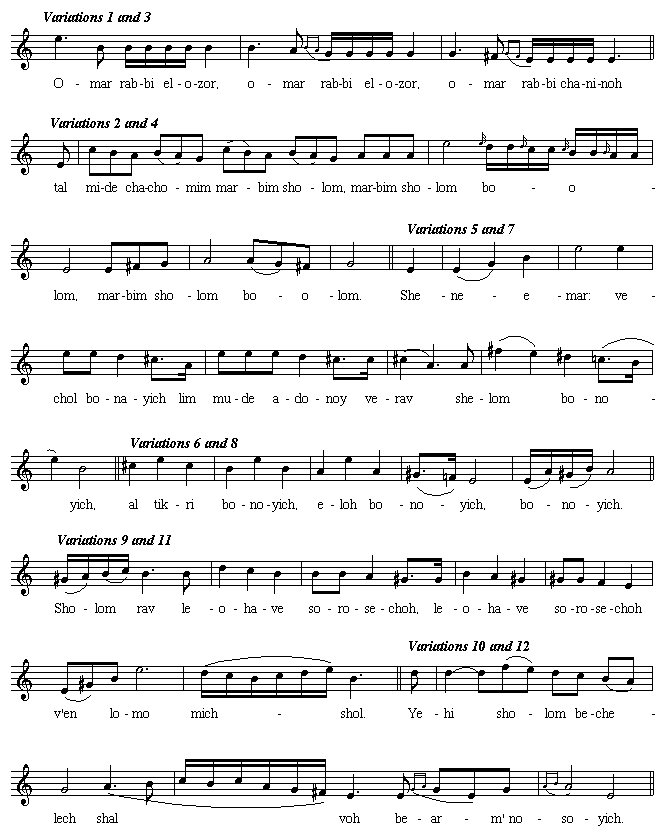
The melody for these variations is a 17th century Chazzan song, which is unaccompanied and is attached to a rabbinical lesson:
The variations are continuous and each one assumes its character, in part, by being a different combination of instruments in the quartet:
| Theme | Quartet |
| Variation 1 | Trio: viola, cello, piano |
| Variation 2 | Duo: viola, cello |
| Variation 3 | Duo: sax, piano |
| Variation 4 | Solo piano |
| Variation 5 | Trio: sax, cello, piano |
| Variation 6 | Duo: sax, cello |
| Variation 7 | Duo: viola, piano |
| Variation 8 | Trio: sax, viola, cello |
| Variation 9 | Trio: sax, viola, piano |
| Variation 10 | Duo: sax, viola |
| Variation 11 | Duo: cello, piano |
| Variation 12 | Quartet |
| Fugue and Theme | Quartet |
The theme is rather long, much too long for twelve full variations, but fortunately, it divides neatly into six distinct parts. Each of these parts serves as a source for two variations. The piece begins with the viola playing a "linking" theme, which is used throughout to frame variations, and ultimately to be the subject of the fugue following the last variation and preceding the final restatement of the entire tune. This restatement is important since the melody has been taken apart for the variations.
The variations are grouped into three sections:
The eighth note remains at a constant tempo (MM = 156) throughout; each variation utilizes a different grouping of eighths to create beats of different lengths, which in turn creates the illusion of different tempi.