The Recording Studio
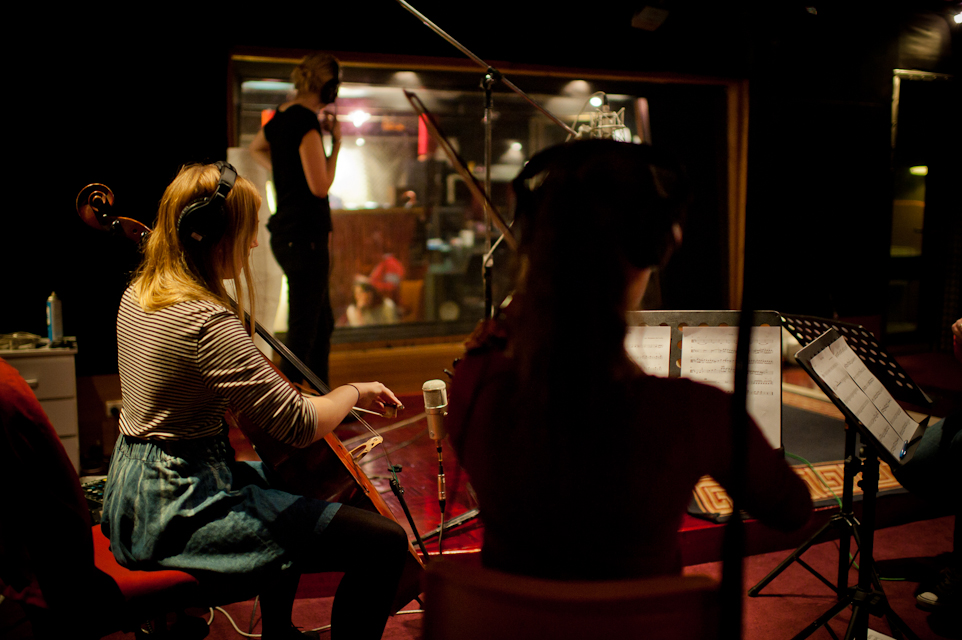
The invention of recorded music was one of the most consequential events in all of music history: by the middle of the twentieth century, listening to a recorded performance was far more common than listening to a live one. With this change, the recording studio has emerged as a primary focus of music creation and performance, even as it has changed form over time.
Recording Environments
Regardless of the technology available, a fundamental need for recording music is isolation: not only does a recording need to be free from other sounds in the area, but from natural reverberation or echo. Ideally, the performance should be clear and dry, so the desired resonance or reverberation can be added electronically in a controlled way.
Designed Spaces
Professional-level recording studios are buildings designed from the ground up by acousticians for the purpose. They contain three types of rooms: recording chambers, control rooms, and machine rooms.
Recording Chambers
A recording chamber is a specialized room where musicians perform into microphones. The most notable feature of these rooms are their acoustic treatment: Walls are generally covered with acoustic baffling: fabric or foam panels which serve to absorb sound rather than reflect it.
Because these rooms are designed to suppress natural reverberations, it can be disorienting for performers, who will sometimes overcompensate for the lack of resonance. To counteract this, performers will often listen to a monitor feed: the signal being recorded, but with some standard reverberation temporarily applied.
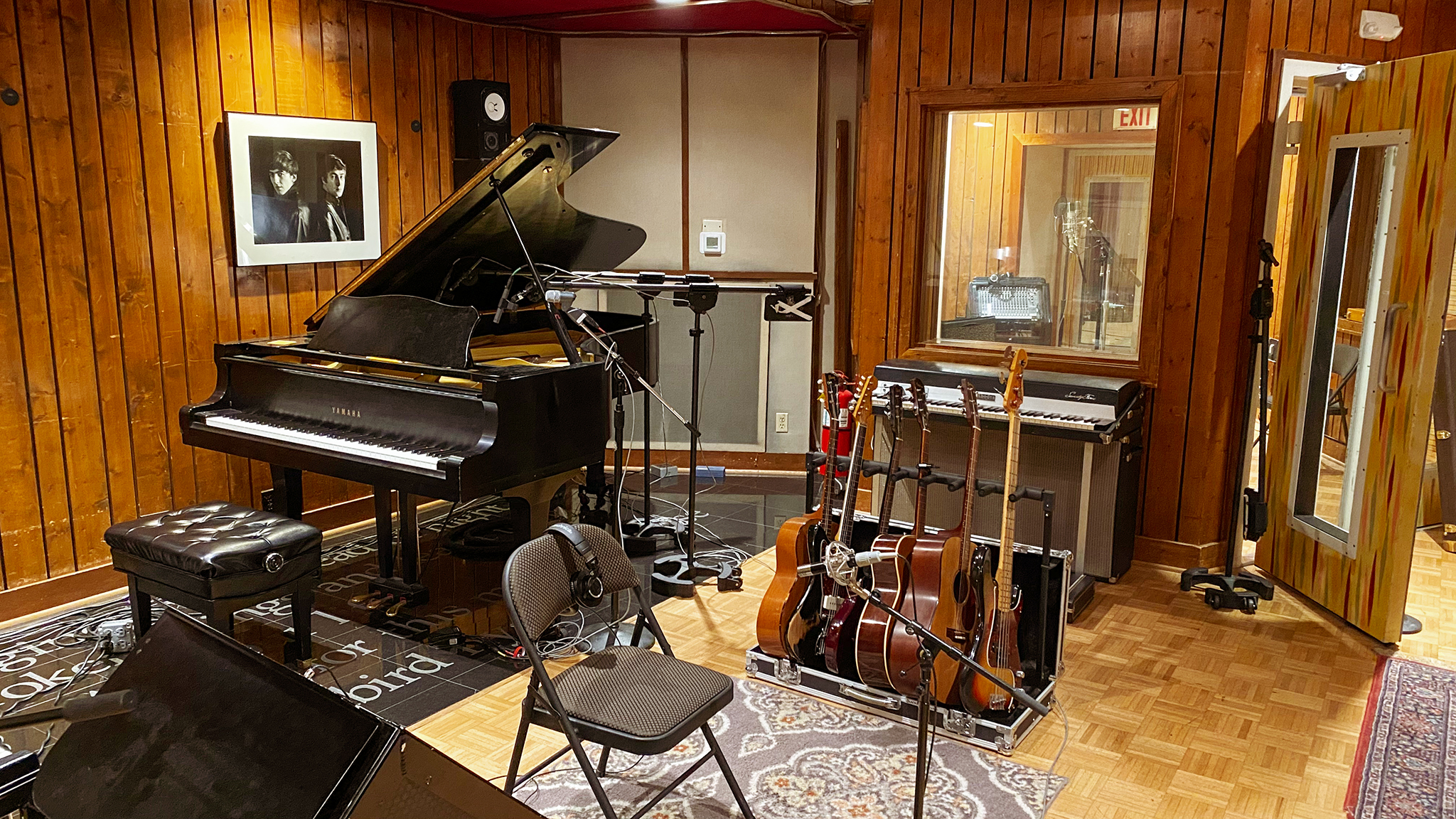
Another important requirement for recording chambers is isolation from outside sounds. Walls, doors and windows are made from heavy, soundproof material, and heating, ventilation and air conditioning systems are controlled to prevent fan sounds from affecting recordings. These chambers are sometimes designed as a floating room: a structure that is physically independent from the surrounding building, with the entire room sitting on rubber blocks or suspended by large springs.
Many studios have multiple recording chambers of varying sizes, from large general purpose spaces to smaller isolation booths for drummers or vocalists.
Control Rooms
A control room is an area where those supporting and supervising the performer work during the recording session. A recording studio's control room typically contains a mixing board: a large component allowing various channels of audio to be individually manipulated and combined into a final recording. In modern studios, recordings are done using a digital audio workstation, with physical control surfaces that take the same form as older analog mixing boards.
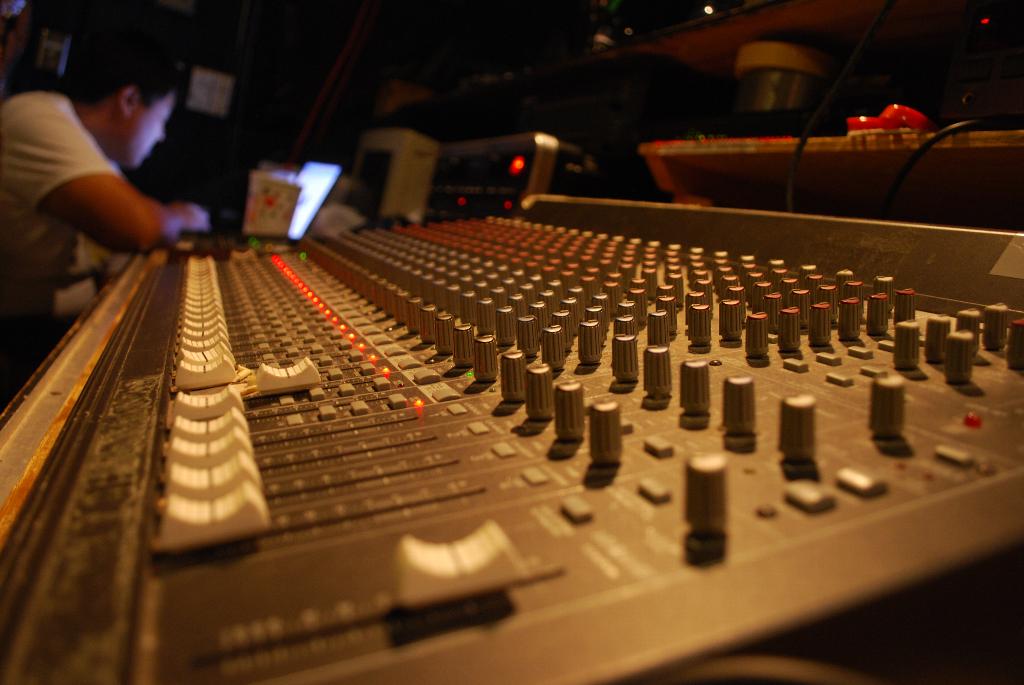
Control rooms will have high quality sound systems for reviewing and perfecting the recording through the process, and will also typically contain a microphone allowing communication with those in the recording chambers.
Machine Rooms
Many audio components used in the recording process — including computers, amplifiers, and recording devices — generate background noise, especially from on-board cooling fans. Because this noise can be distracting to the process of recording and mastering, this equipment is stored in a separate room, with cables connecting equipment to the control room and recording chambers.
Adapted Spaces
Existing spaces can be adapted for use as recording studios. Depending on architectural and financial constraints, renovations can range from adding acoustic baffling to existing walls to full floating room installations.
Ad Hoc Spaces
When necessary, an impromptu recording space can be created by assembling the necessary acoustic environment. Hanging quilts or area rugs on walls can provide a measure of acoustic baffling while assisting with soundproofing. Smaller rooms like clothes closets can be effective in some situations, but bedrooms and other similarly-sized rooms are often better for musical performances.
Roles
With very few exceptions, commercial music recordings — even those by solo artists — represent the collaboration of many individuals working together with a common goal. As the center of a recording session, a recording artist may be supported by several other roles before, during and after the process:
Producer
A producer oversees the recording process and is generally responsible for the final result. The producer might be the owner or manager of the recording studio, especially for independent artists early in their career. A producer might be someone selected by a record company as part of a record contract with an artist. Commercially successful artists may have relationships with well-known producers, or may even act as their own producer.
Engineer
A recording engineer handles all the technical elements of the recording process under the direction of the producer and artist. They are nearly always employed by the recording studio, and have a deep familiarity with the studio's equipment and idiosyncrasies. Engineers set up microphones and other instruments, operate the mixing board and DAW, and mix and master the result after the recording process itself has finished.
Session Musician
Session musicians are performers, often employed by or contracted with the recording studio, who can provide accompanying tracks on short notice for the recording artist. Successful session musicians excel at sight-reading and improvisation, and are able to play in many different styles or genres.
The Studio Process
An effective studio recording process can be much more than recording a piece of music; in many cases, it is a creative process unto itself, resulting in a unique and original musical work.
Songwriting
Generally, recording artists will come to a studio with music that has already been written. In the case of classical music, the intent may be to capture a performance of a piece with little or no room for interpretation.
In other styles of music, a songwriter may have songs which they have been performing live, or even new songs which have not been presented publicly. In this case, the studio process may be more creative in nature, as the producer and artist work together to create a recording that may have fundamental differences from live performances.

In some cases, songs may be written as part of the recording session; many of the tracks on The Beatles' later albums were conceived and written at EMI Studios in London. Other successful recording artists made use of high-end home recording studios, such as Prince's Paisley Park in Chanhassen, Minnesota.
Recording & Arranging
Because recordings present an opportunity to create a polished and perfected performance, studio sessions almost always involve recording repeated performances, called takes, of individual parts. The producer and artist can then select the best take, or even combine portions of different takes into a single result.
A method for improving a recorded part is to have the artist play along with a previous take, allowing the engineer to substitute problematic moments with music from the new track, a process called punching in. Another common technique is to have a performer record multiple performances which supplement or harmonize with one another, called overdubbing.
Even with pieces that are normally performed as an ensemble, parts are usually recorded one at a time, with other recorded parts or temporary backing tracks played through monitor headphones. If parts are recorded simultaneously, performers record in isolation booths to keep the recordings separate.
Mixing and Mastering
Once parts have all been recorded, the producer and artist will work with the engineer to select the best takes, apply filters and effects, and combine them — a process called mixing — to create a complete recording. This process can take as long or longer than the recording process, and may even require re-recording portions of the piece.
While mixing involves combining the many parts to create a cohesive whole, mastering involves attuning that final product for specific type of media. A piece might be mastered differently for distribution on vinyl, compact disc, or digital audio, each of which have different idiosyncrasies and limitations. For creating collections like EPs or albums, mastering includes determining track order and balancing levels between tracks.
The final result of the process is a master recording, which might be delivered to a record company to fulfill a contract or be sent directly to streaming services or duplicating services to produce physical media for retail outlets.
The Recording Studio: Summary
- A recording studio requires acoustic treatment and soundproofing.
- Professional recording studios are comprised of different types of spaces.
- Recording chambers use acoustic baffling and other elements to eliminate reverberation and external sounds. Some facilities exists as floating rooms which are physically separate from the surrounding building.
- Isolation booths are smaller recording spaces designed for specific types of performance, allowing separation from other musicians.
- Control rooms include workstations for controlling the recording process.
- Machine rooms house components that produce extraneous noise, like cooling fans.
- Existing spaces, including homes, can be adapted to use as recording studios with the addition of necessary acoustic treatment.
- Studio sessions typically involve collaborations between different specialized roles.
- Producers oversee the recording process, and may be employed by the studio, hired by the artist, or contracted with a record company.
- Engineers are typically employed by the studio and handle all the technical elements of the recording, including equipment setup and maintenance and the recording process itself.
- Session Musicians are musicians that are often contracted with the studio to play parts on demand to accompany the recording artist.
- Songwriting typically occurs before the recording session, but may be augmented as part of the collaborative recording process.
- The recording process usually happens one part at a time, and will often involve many different takes for each part.
- Common recording techniques include punching in a recording to alter an earlier take, an overdubbing, which involves layering parts to create reinforcement or harmony.
- Mixing involves combining the different recorded parts into a cohesive whole.
- Mastering is the process of polishing and refining a final recording for distribution on a specific type of media, and can include collecting, balancing and ordering tracks for an EP or album.